
As of September 23, 2026, a shark nicknamed 'Bukangi,' spotted in a waterway at Busan's North Port, has become the center of a climate debate. South Korea's Green Party argues the shark's appearance is a warning sign of climate change, pushing back against the celebratory mood among visitors. Its arrival is being attributed to rising sea temperatures reshaping the marine ecosystem.
Key points
- A shark believed to be a tawny nurse shark showed up in an artificial waterway at Busan North Port's waterfront park and picked up the nickname 'Bukangi.'
- Visitor traffic more than quadrupled after the shark appeared, with daily foot traffic estimated at over 10,000.
- Busan Mayor Jeon Jae-soo welcomed it as a sign of a healthy ecosystem, but the Green Party countered that it should be read as a climate warning.
- Confirmed sightings of large sharks along the East Sea coast from January through August this year rose roughly 2.5x compared with 29 sightings in the same period last year.
A large shark recently spotted in an artificial waterway at the waterfront park at Busan's North Port has the whole city buzzing. The waterway sits in Busan's Dong-gu district. First seen on the morning of September 18, the shark is believed to be either a tawny nurse shark or a species locally referred to as heuksang-eo ('black shark'). Locals started calling it 'Bukangi,' after the North Port (Bukhang) location. As word spread, foot traffic more than quadrupled, with daily visitor estimates topping 10,000.
Busan Mayor Jeon Jae-soo, for his part, was thrilled. He interpreted the shark's appearance as a sign that conditions in the waters off North Port aren't bad at all, and said he plans to keep developing the area as a habitat for diverse marine life. In a radio appearance, he even said he was happy enough to want to feed it.
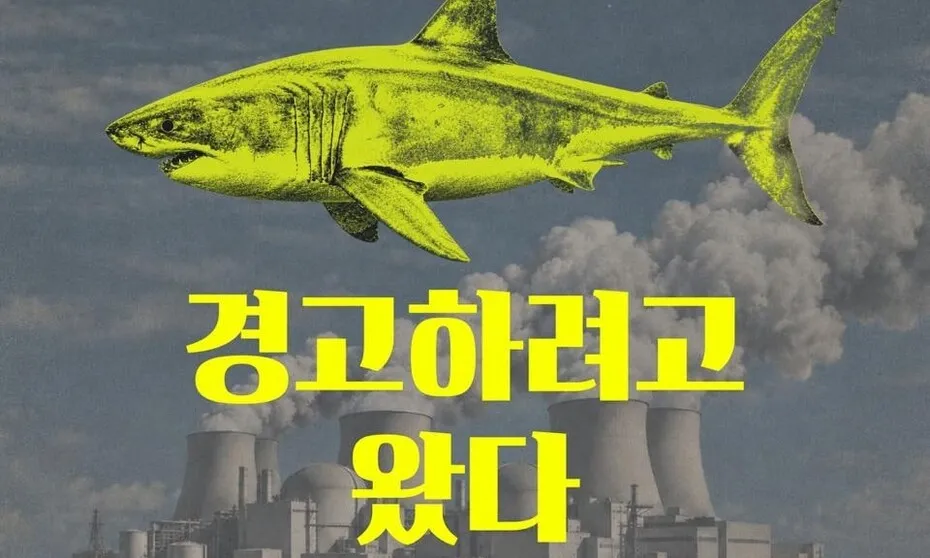
The Green Party pushed back hard. In a statement released on the 22nd titled 'The Shark Came to Warn Us,' the party directly criticized the recent wave of celebration. Its explanation centers on water temperature: as the sea warms, the fish species sharks prey on have moved north, and sharks that normally stay in subtropical waters have followed that prey all the way up to Busan. According to the Green Party, sea temperatures near Busan have risen by about 1.2°C since 2000.
The numbers back up the broader trend, even if exact figures vary slightly by outlet (73 versus 83 in different reports): confirmed sightings of large sharks along the East Sea coast from January through August this year came in at roughly 2.5 times the 29 sightings recorded over the same period last year. The Green Party also pointed to recently revised carbon-neutrality legislation, criticizing the National Assembly for failing to raise the country's emissions-reduction targets adequately.
Filmmaker Leesong Hee-il added his voice to the debate. In a social media post, he raised concerns about treating the shark's appearance as mere entertainment. Noting that ocean heat content is at record highs, he asked whether the shark might, in effect, be a 'climate refugee.'
FAQ
Is the shark that appeared in Busan dangerous?
It's believed to be a tawny nurse shark or a similar species, and no direct threats to people have been reported. Still, as a large wild shark, experts don't recommend approaching it or feeding it.
Why is the shark's appearance being linked to climate change?
The Green Party says rising sea temperatures pushed the fish sharks prey on farther north, and subtropical sharks that normally stay south followed that prey all the way up to Busan's waters.
What's the city of Busan's official position?
Busan Mayor Jeon Jae-soo welcomed the shark's appearance as a sign of a healthy North Port ecosystem and expressed hope for the publicity it's generating — a stance that directly conflicts with the Green Party's climate-warning framing.
More from Korea today
LG Electronics, SK Enmove Team Up on Cooling Tech →Silmido Fixes Misleading Subtitle After 23 Years →
📎 원문 보기 · Sources



Leave a Reply