
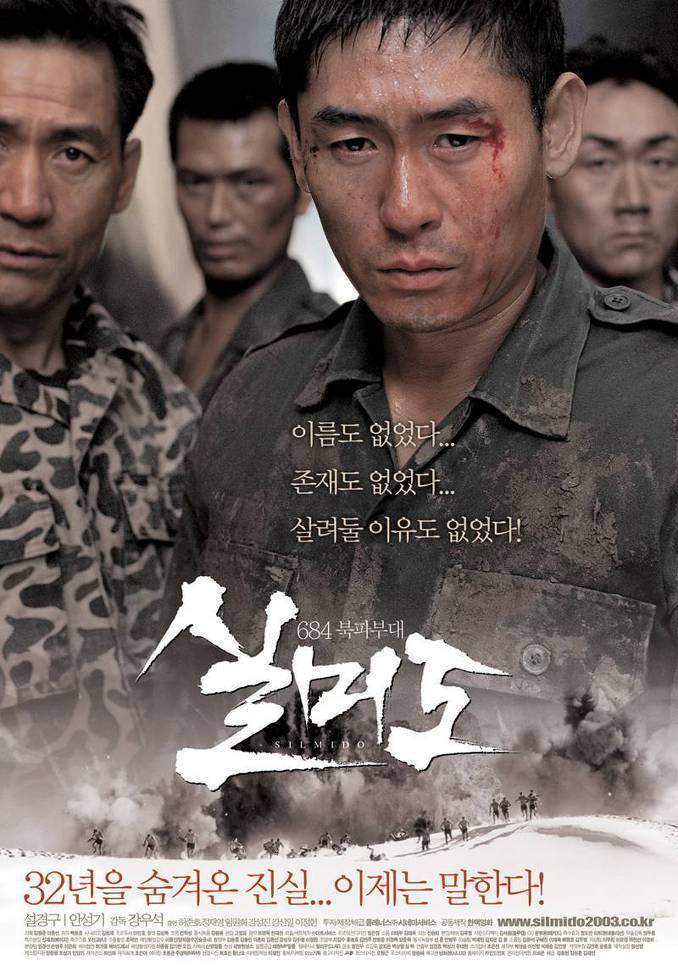
As of September 23, 2026, the opening title card of the 2003 film 'Silmido' has been corrected 23 years after its release. South Korea's Ministry of National Defense said the new subtitle, in effect since September 4, clarifies that the film's inaccurate portrayal of the unit's members as death-row inmates and convicted criminals doesn't match the historical record. Investigations found most of the unit's members were ordinary civilians.
Key points
- The Ministry of National Defense acted on a request from the bereaved families' association of Silmido unit victims and asked the film's distributor in July to revise the subtitle.
- The distributor agreed, and the new subtitle has been running in theaters since September 4.
- Past-history fact-finding bodies confirmed none of the Silmido unit's members were death-row or life-sentence inmates, and most were ordinary civilians.
- The Silmido unit was formed in 1968 and later ended in tragedy when most of its members died during an escape attempt.
The opening title card of 'Silmido,' the film that premiered in late 2003 and has been widely discussed ever since, has recently been changed. South Korea's Ministry of National Defense said on the 23rd that it replaced the original text — which portrayed the unit's members as violent criminals — with wording clarifying that the depiction doesn't match historical fact.
The change was prompted by the victims' families. After the bereaved families' association of the Silmido unit asked for the distorted portrayal to be corrected, the Ministry of National Defense requested in July that the film's distributor revise the subtitle. The distributor agreed, and the new version has been running in actual theatrical screenings since early this month.
The new text states that portraying the unit's members as special criminals, death-row inmates, or life-sentence prisoners doesn't align with the historical record. It also notes that a past-history fact-finding body under the Ministry of National Defense and South Korea's Truth and Reconciliation Commission separately confirmed that none of the unit's members were death-row or life-sentence inmates, and that a large share were ordinary civilians. Previously, the film carried only a note distinguishing its fictional trainee characters from an unrelated real infiltration unit — without correcting the broader misconception about the members' backgrounds.
The Silmido unit was formed in early 1968, following a North Korean commando infiltration into Seoul. Thirty-one agents were recruited for the cross-border mission, seven of whom died during brutal training. The remaining 24 left the base during a breakout in the summer of 1971, killed several officers, and headed toward Seoul, clashing with military and police forces along the way — 20 died in the confrontation. The four survivors who were captured were sentenced to death, and the sentences were carried out the following year.
The Ministry of National Defense said it hopes the subtitle change helps restore the honor of the unit's members and their families. A ministry-affiliated body already acknowledged human rights violations tied to the case back in 2006, recommending an apology and the recovery of remains — making this latest step a belated follow-up.
FAQ
Is the movie 'Silmido' based on a true story?
It's based on a real special forces unit formed under the South Korean Air Force in 1968 and a 1971 breakout incident, though details like the characters' backgrounds were dramatized for the film.
Why were the unit's members mistakenly thought to be death-row inmates?
The film portrayed them as former special criminals, and without any correcting context, that portrayal became the accepted narrative. The Ministry of National Defense has now added a subtitle to set the record straight.
What actually happened to the real unit members?
Of the 31 original agents, seven died during training. Of the remaining 24, 20 died in clashes after their escape attempt, and the four survivors were executed the following year after being sentenced to death.
More from Korea today
LG Electronics, SK Enmove Team Up on Cooling Tech →Busan's Shark 'Bukangi' Becomes a Climate Warning →
📎 원문 보기 · Sources
동아일보 · Sep 23, 2026영화 ‘실미도’ 23년만에 안내자막 수정…“사형수·무기수 없었다”Read the full story & photos at the source →

한국경제 · Sep 23, 2026'사형수 아니었다'…영화 '실미도' 자막, 23년 만에 수정Read the full story & photos at the source →
Leave a Reply