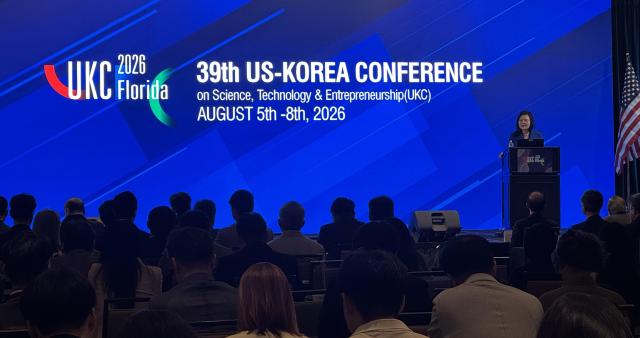
As of August 10, 2026, Nvidia co-founder Chris Malachowsky has drawn attention for saying today's AI industry couldn't exist without memory chip technology from Samsung Electronics and SK Hynix. Delivering a keynote at a four-day US-Korea science and technology conference in Florida, he also praised the direction of Korea's national AI policy — and argued the industry is still in its early innings, with much bigger shifts still ahead.
Key points
- Nvidia co-founder and Fellow Chris Malachowsky delivered a keynote at a conference bringing together roughly 1,000 US and Korean scientists and engineers.
- He named Samsung Electronics and SK Hynix's high-bandwidth memory (HBM) technology as the foundation underpinning AI supercomputing worldwide.
- He predicted AI infrastructure will become as essential to nations as power grids or water systems, and praised the Lee Jae-myung administration's approach to AI policy.
- Park In-kyu, head of the Ministry of Science and ICT's Office of Science and Technology Innovation, also attended, discussing US-Korea cooperation on space and quantum technology and touring Kennedy Space Center.
Roughly 1,000 scientists and engineers from the US and Korea gathered in Orlando, Florida, for a four-day conference on joint research and commercialization across artificial intelligence, aerospace, semiconductors and biohealth. Now in its 39th year since launching in 1994, this year's event ran under the theme 'From Imagination to Innovation to Reality.' At the opening ceremony, organizers said collaboration that crosses both national borders and academic disciplines would shape breakthroughs that change humanity's future.
Among the keynote speakers, the one who drew the most attention was the Nvidia co-founder who helped commercialize the graphics processing unit, or GPU. He credited the memory chip technology built up by Samsung Electronics and SK Hynix as the backbone of today's AI supercomputing infrastructure, saying that without their contributions, neither Nvidia nor the broader AI boom would have been possible. He predicted AI infrastructure will soon become as fundamental to a country as its power grid or water supply, and voiced support for the Korean government's decision to make AI a national priority.
He pushed back on growing worries about an AI investment bubble. What's unfolding now, he argued, is just the early stage of a generational industrial shift, and the biggest changes are still to come. Pointing to how nations that built out power grids or telecom networks first ended up leading their eras, he warned that countries slow to build AI infrastructure risk falling behind — and that securing independent AI capacity quickly is essential for any nation that wants to shape its own future.
The next phase he described is one where AI spreads well beyond research labs. He predicted that over the next decade, the most consequential breakthroughs won't come from major AI labs but from people applying AI within life sciences, medicine, climate science, materials engineering and manufacturing — innovation emerging where deep domain expertise meets new tools, blurring the lines between fields. He added that investment made only once demand is obvious is already too late, and that the chip and AI companies currently leading will likely hold their edge for some time.
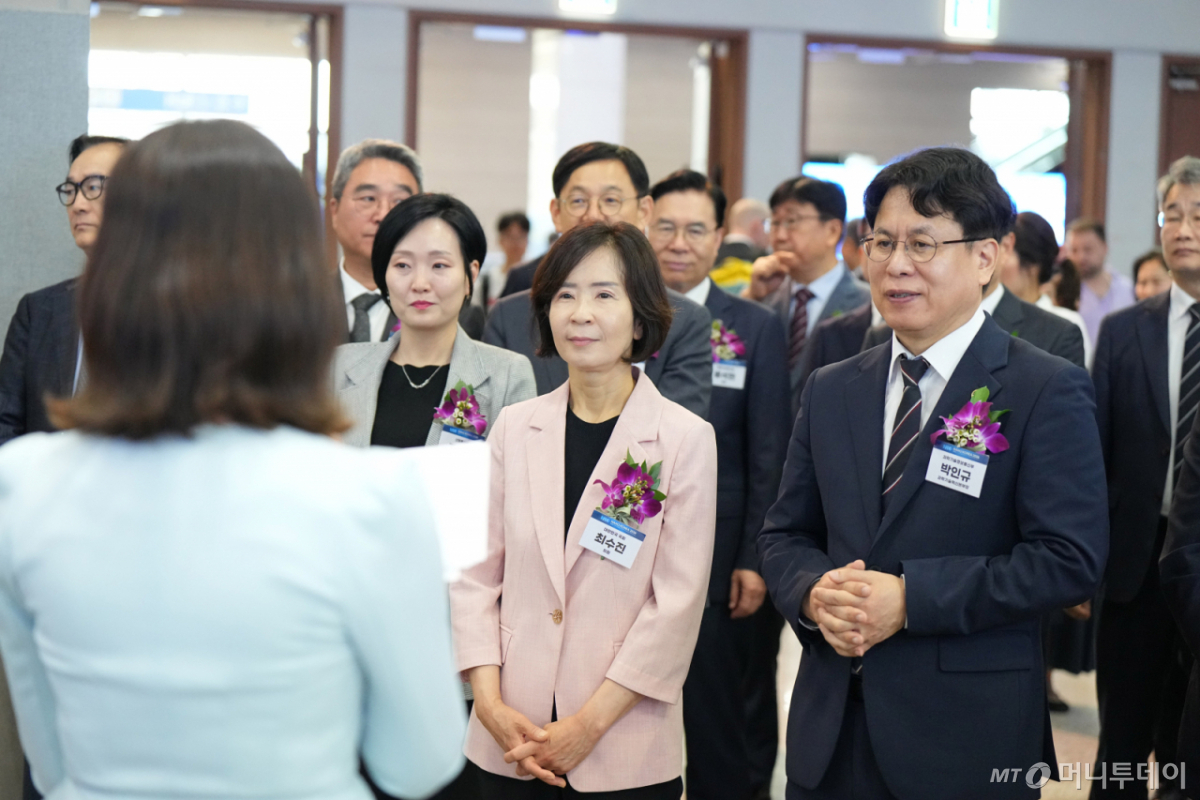
Also at the conference, Park In-kyu, head of the Ministry of Science and ICT's Office of Science and Technology Innovation, attended sessions on AI, space, and quantum technology applications. A day earlier he toured Kennedy Space Center, reviewing facilities and cooperation tied to the international lunar exploration project Korea is participating in, and pledged support for exchange programs to bring the experience of Korean-American scientists back into research efforts at home.
FAQ
Who is Chris Malachowsky?
One of Nvidia's three co-founders, who directly engineered the early graphics processing unit technology that became the technical foundation of the company.
Why does high-bandwidth memory (HBM) matter?
It's the memory that feeds data quickly to the GPUs handling large-scale AI computation, a market currently led globally by Samsung Electronics and SK Hynix.
What was this conference?
A US-Korea science and technology forum launched in 1994, now in its 39th year, held over four days in Florida to discuss cooperation in AI, aerospace, semiconductors and more.
More from Korea today
aespa Packs Gocheok Dome for First Solo Concert →Squid Game US Spinoff 'Heckler' Officially Scrapped →
📎 원문 보기 · Sources



머니투데이 · Aug 09, 2026박인규 혁신본부장, UKC 2026 참석…우주·AI 협력 강조 - 머니투데이Read the full story & photos at the source →

Leave a Reply