As of October 25, 2026, LG Electronics is set to start supplying its LG Professional commercial washers and dryers to Schilling, a German laundry-solutions company, next month. Schilling distributes and installs equipment for laundromats and coin-operated laundries across Germany. LG's commercial washer sales in Europe rose about 20% year over year through September.
Key points
- LG Electronics will begin supplying its LG Professional line to Germany's Schilling in November 2026.
- The machines use AI to estimate each load's weight and adjust water use and drying conditions, cutting energy consumption.
- At the laundry trade show that opened October 23 in Milan, LG ran a booth more than twice the size of the one it had at its previous appearance.
- LG's 2026 shipments to CSC ServiceWorks, North America's largest laundry-solutions company, are more than double last year's.
LG Electronics is sending its LG Professional commercial washers and dryers to Schilling, a German laundry-solutions specialist. Deliveries start in November 2026. Schilling distributes and installs equipment for laundromats and coin-operated laundries around Germany, and the deal is part of LG's broader push to grow its business-customer (B2B) sales in Europe.
The lineup is built on a package of technologies LG calls AI Core Tech. The AI estimates the weight of each load and sets the water amount and drying conditions to match, which LG says cuts cycle time and water and power use. The drum spins about 18 times per second to wring out moisture and shorten drying, and a gyro sensor detects lopsided loads and corrects them on its own to reduce vibration and noise.
In commercial laundry, buyers care about performance and energy efficiency, but also about whether the machines keep running reliably after installation and how good the maintenance is. LG called Germany a key European market, with heavy laundry demand from hotels, hospitals and industrial sites, and read the deal as a sign that local operators value both its products and its service. LG's commercial washer sales in Europe grew about 20% in January-September compared with the same period last year.
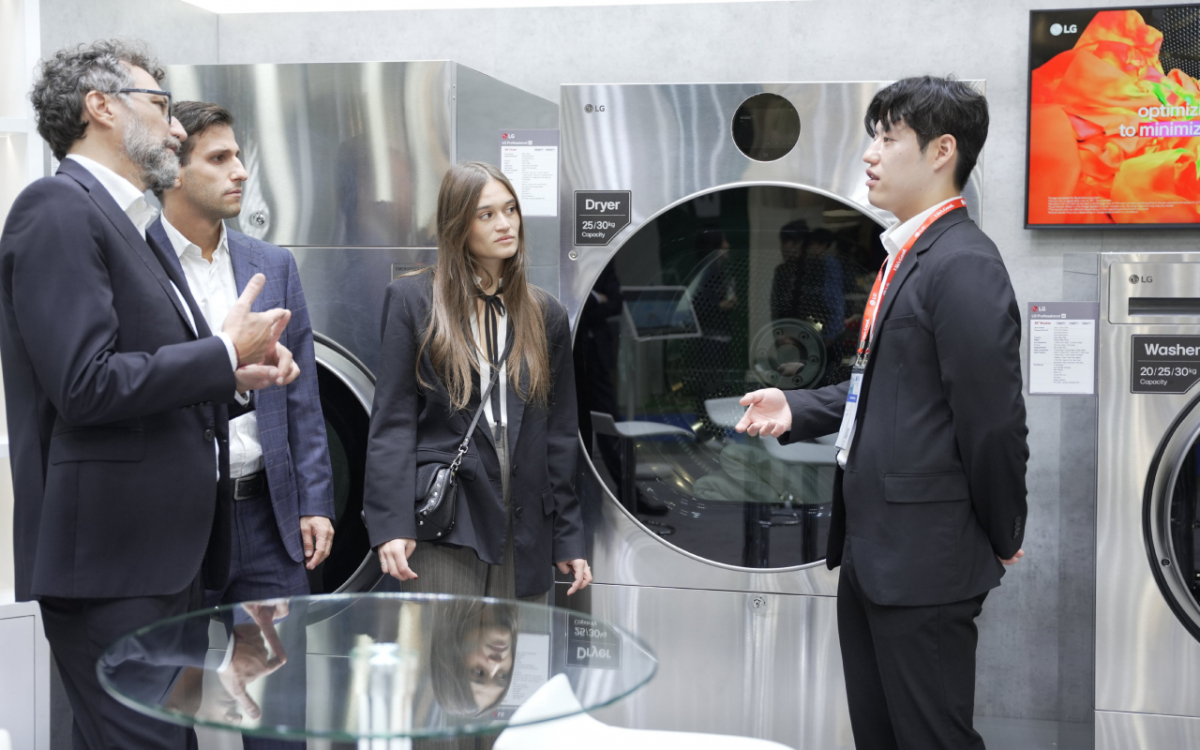
LG also worked to get in front of more local customers. It took part in Expo Detergo, a laundry industry trade show held once every four years, which opened October 23 in Milan, and set up a booth of about 90 sq m (roughly 970 sq ft), more than double the size of its booth at the previous edition. On display were machines in the 10-30 kg (22-66 lb) class, a product that cleans wool and silk garments with water and a dedicated detergent, and Laundry Crew, a management service with remote control and error alerts.
Expansion is continuing elsewhere too. In North America, LG more than doubled this year's shipments to CSC ServiceWorks, the region's top player, compared with last year, and in Thailand, the Philippines and Vietnam it is strengthening partnerships with local distribution channels. Son Chang-woo, head of LG's Living Solutions business unit, said the company aims to grow quickly in the commercial laundry market.
FAQ
What kind of company is Schilling?
It's a German specialist that distributes and installs laundry equipment and related solutions for laundromats, coin-operated laundries and similar businesses across the country.
How is LG Professional different from a regular washing machine?
It's a large-capacity commercial machine. AI estimates each load's weight and adjusts water use and drying conditions, and a gyro sensor corrects drum imbalance to reduce vibration and noise.
Why does LG see Germany as important?
LG describes Germany as a core market in Europe's commercial laundry industry, with strong demand from hotels, healthcare facilities and industrial sites.
More from Korea today
📎 원문 보기 · Sources


세계일보 · Oct 25, 2026LG전자, 상업용 AI 세탁가전으로 유럽 시장 공략 본격화Read the full story & photos at the source →
머니투데이 · Oct 25, 2026대용량에 AI 기능까지…LG전자, 상업용 세탁가전 시장 공략 속도 - 머니투데이Read the full story & photos at the source →

 한겨레 · Oct 25, 2026

 아이뉴스24 · Oct 16, 2026



 파이낸셜뉴스 · Oct 21, 2026


 조선일보 · Oct 20, 2026




 조선일보 · Oct 17, 2026
 뉴스통
뉴스통








 매일경제 · Oct 12, 2026