Blog

  • Bank of Korea Hikes Rate to 3% in Back-to-Back Move

    Bank of Korea Hikes Rate to 3% in Back-to-Back Move

    As of August 28, 2026, South Korea's benchmark interest rate stands at 3.00% a year. The Bank of Korea's Monetary Policy Board raised the rate by 0.25 percentage points at its meeting the day before — the second straight increase after July's hike — in a move widely read as a preemptive strike against rising inflation.

    3.00%Bank of Korea's base rate after the hike
    0.25%pSize of each hike in July and August's back-to-back moves
    2,000 trillion won (~$1.45T)Household debt, breaking the record for the first time
    6-to-1Monetary Policy Board vote in favor of the hike

    Key points

    • On August 27, the Bank of Korea (BOK) raised its base rate by 0.25 percentage points, from 2.75% to 3.00%.
    • It's the second consecutive hike after last month's move. Six of the seven Monetary Policy Board members voted to raise; one, Hwang Geon-il, favored holding steady.
    • Rising global oil prices and income-driven consumer spending were cited as reasons inflation could keep climbing into next year.
    • Household debt has crossed the 2,000 trillion won mark for the first time ever, while home prices in the greater Seoul area keep climbing — both factored into the decision.

    The Bank of Korea's Monetary Policy Board met on August 27 and voted to raise the base rate by 0.25 percentage points, lifting it from 2.75% to 3.00%. It's the second straight increase since the board's last hike on July 16. Six of the seven board members backed the move; only Hwang Geon-il dissented, arguing for a hold.

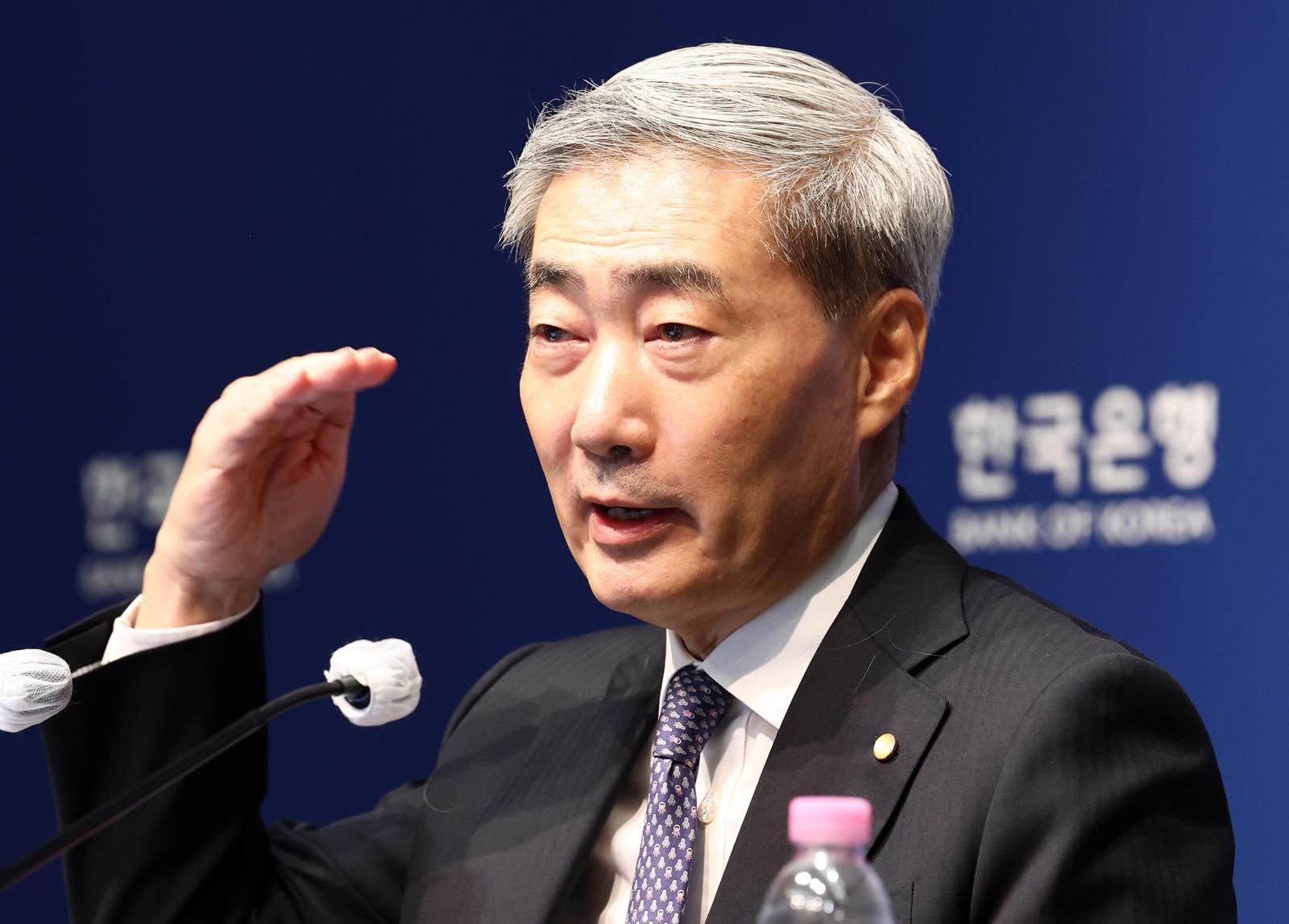
    This marks the first time the BOK has raised rates at back-to-back meetings immediately after pivoting into a tightening cycle. Consecutive hikes right after a policy shift are themselves rare — this is only the fourth such instance, following 2007, 2021-2022 and 2022-2023. Governor Shin Hyun-song said the back-to-back move was a deliberate departure from convention, meant to send markets a clear signal that the central bank is serious about reining in inflation.

    The board pointed to a buildup of higher global oil prices and rising consumer spending fueled by income growth as reasons inflation could keep climbing through next year. Household debt breaking the 2,000 trillion won mark for the first time, along with persistent home-price gains across the greater Seoul area, also weighed on the decision. Governor Shin said acting early — before inflation spreads further — would ultimately keep the cost to the broader economy lower.

    In its statement, the board said it would keep monitoring inflation and growth conditions to decide the pace and scale of any further hikes, signaling the tightening cycle isn't over. Some market watchers expect one or two more hikes by next February, pushing the rate to somewhere between 3.25% and 3.5% by mid-year. Higher policy rates typically filter through to market lending rates, meaning bigger interest burdens ahead for households and businesses with loans.

    In Korea right nowThe back-to-back rate hike is dominating conversation in Korea right now, with households and businesses carrying loans bracing for heavier interest payments. The timing has struck a nerve: household debt just topped 2,000 trillion won for the first time, and home prices in Seoul and the surrounding metro area keep climbing, so all eyes are on how commercial bank lending rates and the housing market respond. Whether the BOK pulls the trigger again at its next policy meeting is now the question everyone's watching.

    FAQ

    Why does South Korea's base rate matter?

    The base rate directly shapes deposit and loan rates as well as the won's exchange rate, which affects interest costs and currency-conversion expenses for foreign investors and residents alike.

    How does this hike affect foreign residents in Korea?

    Foreign residents with a mortgage or jeonse (lump-sum lease deposit) loan could see higher interest payments, and shifts in the won's value could also change the cost of currency exchange.

    Will the Bank of Korea keep raising rates?

    The BOK says it will decide on further hikes based on inflation and growth data, and some market watchers expect the rate to reach 3.25%-3.5% by the first half of next year.

    📎 원문 보기 · Sources
    동아일보 기사 이미지Bank of Korea Hikes Rate to 3% in Back-to-Back Move동아일보 · Aug 28, 2026기준금리 3%시대… “물가 선제 대응” 추가 인상 열어놔Read the full story & photos at the source →
    Bank of Korea Hikes Rate to 3% in Back-to-Back Move세계일보 · Aug 28, 2026기준금리 3% 시대 “물가상승 선제 대응”外 [한강로 경제브리핑]Read the full story & photos at the source →
  • Gamescom 2026 Opens in Cologne With K-Game Reveals

    Gamescom 2026 Opens in Cologne With K-Game Reveals

    As of August 26, 2026, Gamescom 2026, the world's largest gaming trade show, has opened for a five-day run in Cologne, Germany. At the Opening Night Live showcase held the evening before, Korean studios NCsoft and Krafton unveiled a wave of new titles, joined by a string of fresh trailers from major international publishers.

    1,600+ companies, 67 countriesScale of Gamescom 2026 exhibitors
    233,000 m² (about 2.5 million sq ft)Gamescom 2026 exhibition floor space
    5 titlesNew games Krafton unveiled
    2 categoriesGamescom Award categories Crimson Desert is up for

    Key points

    • Gamescom 2026 runs August 26-30 at Koelnmesse in Cologne, Germany, drawing more than 1,600 companies from 67 countries.
    • The Opening Night Live kickoff show packed its roughly 5,000-seat venue, with TV host Geoff Keighley emceeing.
    • NCsoft showed off 'Like or Die,' 'Aion 2,' and 'Cinder City,' while Krafton unveiled five new titles including 'PUBG: DeadNet.'
    • Pearl Abyss's 'Crimson Desert' landed nominations in two Gamescom Awards categories, with winners announced on August 28.

    The world's biggest gaming trade show, Gamescom 2026, has kicked off its five-day run at Koelnmesse in Cologne, Germany. This year's edition is shaping up to be the largest yet, with more than 1,600 companies from 67 countries in attendance, the entire large-format exhibition space sold out for the first time, and roughly 70% of exhibitors coming from outside Germany. Fans and industry insiders from around the world packed the venue for the preview show ahead of the official opening.

    TV host Geoff Keighley emceed the Opening Night Live kickoff, where the roughly 5,000-seat venue filled up two hours before showtime, with latecomers stuck standing in the back. On stage, Keighley predicted this year's on-site attendance would top 350,000, and noted that despite layoffs, studio closures, and a spike in memory chip prices squeezing the industry, developers are still pushing out ambitious new games.

    The show delivered a steady stream of major reveals. China's HoYoverse unveiled a new dark, live-action-style co-op action game. Microsoft dropped a trailer for its Xbox-exclusive shooter, locking in an October 6 release date. NetEase confirmed a global launch next January for its subculture-style game. Finland's Remedy showed off an action title launching September 24, while Ukraine's 4A Games revealed a new trailer for its next 'Metro' entry. 'Path of Exile 2,' published in Korea by Kakao Games, confirmed a full launch on December 11, and the show was rounded out by sequels, remakes, and reboots of racing, shooter, and strategy-sim franchises. Square Enix had the director of its Final Fantasy remake trilogy personally introduce the trailer for the series' final chapter, confirming a spring launch next year, while CD Projekt Red drew a huge ovation for announcing a fully overhauled remaster of its flagship title on September 29 — free for existing owners.

    Korean publishers made their presence felt throughout. NCsoft locked in the official title for its space-broadcast-themed shooter, previously known only by a codename, now called 'Like or Die,' alongside a new MMORPG trailer and a lore reveal for its upcoming third-person shooter. Krafton showed five titles in total, including a sequel to its flagship franchise, plus a shooter set in the forests and small towns of the Pacific Northwest that blends battle royale with rules that shift from match to match. Pearl Abyss skipped a new-game announcement altogether, instead demoing 'Crimson Desert' on Samsung's booth using a new 6K gaming monitor; the title landed nominations in two Gamescom Awards categories, with winners set to be announced August 28. A Kakao Games subsidiary showcased a zombie-survival game set in medieval England at the business matchmaking hall, while the Korea Creative Content Agency ran a joint pavilion with 13 small and indie studios. Several National Assembly members also visited the show to check out global industry trends firsthand.

    In Korea right nowDomestic industry watchers say Gamescom 2026 underscores a broader shift for Korean game companies — moving beyond mobile and MMORPGs toward shooters, action RPGs, and premium PC/console releases. Meanwhile, it remains unclear whether major publishers will even show up at G-STAR, Korea's own domestic gaming expo, this year — a sign, some say, that Korean studios are increasingly prioritizing the global stage over the home turf.

    FAQ

    What is Gamescom?

    It's the world's largest gaming trade show, held annually in Cologne, Germany, and considered — alongside the year-end Game Awards in the US — one of the industry's premier stages for unveiling new titles.

    What new games did Korean companies show at this year's event?

    NCsoft revealed the official name of its space-broadcast-themed shooter, 'Like or Die,' plus a new MMORPG trailer, while Krafton debuted five new titles including a sequel to its flagship franchise.

    How does Crimson Desert fit into this year's show?

    Instead of a new-game reveal, Pearl Abyss demoed Crimson Desert at Samsung's booth on a new 6K monitor. The game is nominated in two Gamescom Awards categories, with winners announced August 28.

    📎 원문 보기 · Sources

    연합뉴스 · Aug 26, 2026[가보니] 신작 정보에 환호성…전세계 게이머 축제 된 게임스컴 전야제 | 연합뉴스Read the full story & photos at the source →
    스포츠경향 기사 이미지Gamescom 2026 Opens in Cologne With K-Game Reveals스포츠경향 · Aug 25, 2026역대 최대 ‘게임스컴’ 26일 개막…K-게임 신작 푼다Read the full story & photos at the source →
    zdnetzdnetRead the full story & photos at the source →
    데일리안 기사 이미지Gamescom 2026 Opens in Cologne With K-Game Reveals데일리안 · Aug 25, 2026K게임 '신작 쇼윈도' 된 쾰른…게임스컴 2026, D-1Read the full story & photos at the source →

  • Iran Sanctions 45 Tankers Including Korea’s Sinokor

    Iran Sanctions 45 Tankers Including Korea’s Sinokor

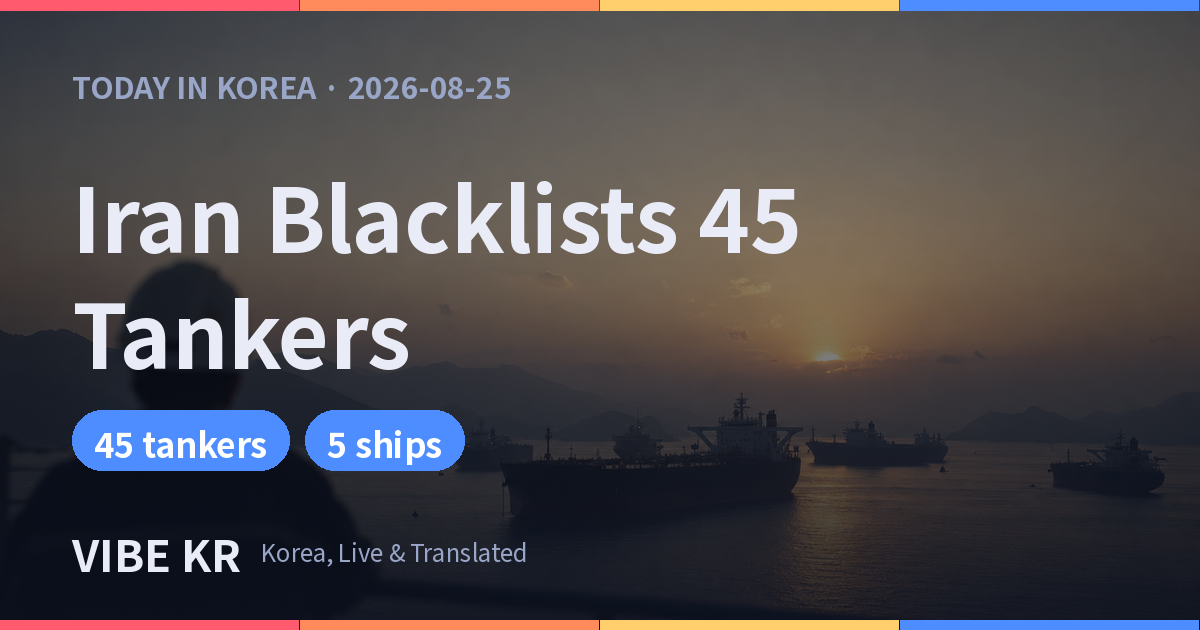
    As of August 25, 2026, Iran's newly created Persian Gulf Strait Authority has blacklisted 45 tankers for violating Hormuz Strait transit rules, including vessels owned by South Korean shipping firm Sinokor Merchant Marine. The authority warned it can fine, detain, or seize cargo from ships on the list, and tensions around Hormuz are flaring again as the US moves to tighten sanctions on Iran.

    45 tankersVessels Iran blacklisted for Hormuz Strait transit violations
    5 shipsSinokor Merchant Marine vessels named on the sanctions list
    8 million barrels/dayCrude oil volume the US energy secretary says flows through Hormuz daily

    Key points

    • On August 23, Iran's Persian Gulf Strait Authority (PGSA) blacklisted 45 tankers for violating transit rules.
    • The list reportedly includes five vessels owned by Korea's Sinokor Merchant Marine.
    • Ships tied to shipping companies from Norway, Saudi Arabia, the UAE, and the Netherlands were also named.
    • The US has signaled tougher sanctions on Iran, and President Trump keeps claiming the Hormuz Strait falls under American jurisdiction.

    Iran's newly formed strait watchdog, the Persian Gulf Strait Authority (PGSA), posted the names of 45 tankers on X on August 23, warning that vessels on the list could face fines, detention, or cargo seizure for violating transit rules. The roster includes ships owned by Sinokor Merchant Marine, a South Korean shipping company. Local reports put the Sinokor-owned count at five vessels. Sinokor ranks as Korea's third-largest shipping company by revenue.

    The blacklist spans a mix of vessel types, from ultra-large crude carriers to LNG and LPG tankers to refined-product carriers. Alongside Sinokor, ships tied to Norwegian ship manager Klaveness, Saudi Arabia's state-run carrier Bahri, the logistics and shipping arm of Abu Dhabi's state oil company ADNOC and its subsidiary Navig8, and vessels from Stolt Tankers all made the list.

    The PGSA said it could add more vessels to the sanctions list, including ships involved in ship-to-ship transfers with already-blacklisted tankers, though it didn't spell out exactly which rule each vessel broke. Given that Iranian authorities have long required advance transit permits and toll-like fees from ships passing through the strait, the move is widely seen as connected to that requirement. Vessels named on the list reportedly can still be removed if operators submit supporting documentation.

    The crackdown lands as the US signals even harsher sanctions on Iran, reigniting tensions around the Hormuz Strait. President Trump has repeatedly claimed the waterway effectively falls under US jurisdiction. US Energy Secretary Chris Wright has said roughly 8 million barrels of crude oil pass safely through the strait each day thanks to US Navy escorts.

    In Korea right nowIn Korea, the direct naming of Sinokor Merchant Marine, one of the country's major carriers, has put the shipping industry on alert. Since Korea sources much of its crude from the Middle East, any disruption to Hormuz transit could ripple into domestic energy supply and shipping costs. There's been no official government response so far, but attention is turning to how Sinokor and other Korean carriers navigate the situation.

    FAQ

    What is the Persian Gulf Strait Authority (PGSA)?

    It's a newly created Iranian body tasked with overseeing Hormuz Strait transit, including publicizing and sanctioning ships it says violated transit rules.

    Why were Korean ships included on the list?

    Five vessels owned by Korean shipping company Sinokor Merchant Marine were blacklisted for alleged transit rule violations, though the specific rule broken wasn't disclosed.

    Will this actually stop the ships from sailing?

    So far, Iran has only warned of possible fines, detention, or cargo seizure. Reports indicate there's a process for vessels to be removed from the list by submitting supporting documentation.

    📎 원문 보기 · Sources

    조선일보 기사 이미지Iran Sanctions 45 Tankers Including Korea’s Sinokor조선일보 · Aug 24, 2026이란 “韓 장금상선 등 45척, 호르무즈 제재 대상”Read the full story & photos at the source →
    한겨레 기사 이미지Iran Sanctions 45 Tankers Including Korea’s Sinokor한겨레 · Aug 25, 2026이란 “한국 장금상선 소유 유조선 등 45척 호르무즈 통항 규칙 위반”Read the full story & photos at the source →
    머니투데이 기사 이미지Iran Sanctions 45 Tankers Including Korea’s Sinokor머니투데이 · Aug 25, 2026이란 "한국 장금상선 유조선 등 45척, 호르무즈 규정 위반" - 머니투데이Read the full story & photos at the source →

  • ATEEZ San Dance Craze Sparks Racism Row in Japan

    ATEEZ San Dance Craze Sparks Racism Row in Japan

    As of August 23, 2026, a Japanese YouTuber imitating ATEEZ member San's viral dance is under fire for pulling his eyes back in a widely recognized racist gesture. The influencer, known as Gamix and followed by more than a million subscribers, deleted the clip but never apologized — instead posting a follow-up video defending the shape of Asian eyes. Criticism has only grown since he skipped the topic entirely during a subsequent livestream.

    1.12 millionGamix's YouTube subscriber count
    2.16 millionGamix's Instagram follower count
    No. 1 on Billboard 200US Billboard ranking for ATEEZ's latest mini album
    August 9Date San performed the choreography at the ceremonial first kick

    Key points

    • San performed part of his group's choreography during a ceremonial first-kick appearance at a soccer match on August 9, and the clip went viral online as a dance challenge.
    • Japanese YouTuber Gamix wore a matching jersey while recreating the choreography on August 20, then pulled his eyes back with his hands — a gesture widely condemned as mocking East Asian features.
    • As backlash grew, Gamix deleted the video but posted an English-language clip claiming his eyes simply look that way, deepening the controversy instead of resolving it.
    • In a roughly 50-minute livestream that followed, he addressed past comments about a soccer player and another YouTuber but stayed silent on San or the controversy itself.

    A dance move ATEEZ member San performed at a soccer match has snowballed into an unexpected racism controversy. San served as a ceremonial first-kicker at a match on August 9, showing up in a team jersey and running through part of his group's hit-song choreography for the cameras. The short clip instantly kicked off a copycat challenge online, drawing fans and influencers from multiple countries — including a Japanese YouTuber who tracked down a matching jersey to recreate the moves.

    The trouble started when that YouTuber, mid-routine, suddenly reached up with both hands and pulled the corners of his eyes outward. The gesture is a long-recognized racist trope in the West, used to caricature and mock East Asian eye shapes. As the clip spread rapidly across domestic and international communities and social media, it drew both confusion and sharp criticism — made sharper by the fact that the person doing it was himself East Asian.

    As the backlash intensified, the YouTuber quickly deleted the video. But rather than issuing a direct apology, he posted a new English-language clip claiming his eyes simply look that way when he wakes up in the morning — a move that only fanned the controversy further. He later went live on YouTube in what appeared to be an attempt at damage control, but the only people he addressed by name were a well-known soccer star and another globally famous YouTuber. San and the controversy itself went unmentioned.

    The YouTuber, born in 2007, is a major influencer with a combined audience in the millions across platforms. He drew attention back in June, during the soccer World Cup, when cameras caught him in tears in the stands after his national team's elimination — a moment that led to a meet-up with the world's most-subscribed YouTuber and a ticket to the final. He'd already drawn some criticism during the tournament, however, over posts that appeared to target a specific player.

    Meanwhile, San's group is riding a wave of global momentum: the title track off their summer mini album climbed domestic music charts, and the album itself hit No. 1 on the US Billboard 200. The controversy has drawn extra attention precisely because it grew out of the dance-challenge craze fueled by that popularity.

    In Korea right nowDomestic fans and online communities have reacted with a mix of shock and disappointment that someone from the same East Asian cultural sphere would make such a gesture. As K-pop content reaches global audiences, many are calling for zero tolerance toward racist behavior tied to it, regardless of the offender's nationality — with criticism mounting further over the lack of a genuine apology.

    FAQ

    Why is the 'eye-pulling' gesture considered racist?

    It involves using the hands to pull the corners of the eyes outward to narrow them — a gesture with a long history in the West of mocking East Asian facial features.

    Who is San, and how did the controversy start?

    San is a member of ATEEZ. His performance of part of his group's choreography at a ceremonial first kick on August 9 went viral as an online dance challenge, which a Japanese YouTuber then imitated — making the offending gesture in the process.

    Did the YouTuber apologize after the backlash?

    He deleted the video but never issued a direct apology, instead posting a video about the shape of Asian eyes. He also did not address the issue during a livestream held afterward.

    📎 원문 보기 · Sources

    매일경제 기사 이미지ATEEZ San Dance Craze Sparks Racism Row in Japan매일경제 · Aug 22, 2026“같은 동양인이면서”…한국 아이돌 따라하다 ‘눈찢기’한 일본인의 정체 - 매일경제Read the full story & photos at the source →
    텐아시아 기사 이미지ATEEZ San Dance Craze Sparks Racism Row in Japan텐아시아 · Aug 21, 2026에이티즈 최산, 인종차별 당했다…日 유튜버 '눈찢기' 조롱 | 텐아시아Read the full story & photos at the source →
    데일리안 기사 이미지ATEEZ San Dance Craze Sparks Racism Row in Japan데일리안 · Aug 21, 2026"이게 아시아인의 눈"…日 유튜버, 에이티즈 최산 인종 차별 논란Read the full story & photos at the source →
    스포츠서울 기사 이미지ATEEZ San Dance Craze Sparks Racism Row in Japan스포츠서울 · Aug 21, 2026에이티즈 최산, ‘인종차별’ 당했다…日 유명 유튜버 “아시아인은 원래 그래”Read the full story & photos at the source →

  • Galaxy Corp Opens Robot Park, Idols Debut Next Year

    Galaxy Corp Opens Robot Park, Idols Debut Next Year

    As of August 22, 2026, South Korean entertech company Galaxy Corporation has officially opened Galaxy Robot Park, a robot-themed entertainment complex in Seoul's Gangdong District, and announced plans to launch robot idols in the first half of 2027. The company says it will send these robot performers on a world tour starting in the second half of next year.

    20,000+Visitors before the official opening
    12 robotsRobots one operator can control simultaneously
    1 trillion won (~$725 million)Galaxy Corporation's estimated valuation

    Key points

    • At the August 21 press event, multiple humanoid robots performed a synchronized K-pop dance routine alongside a taekwondo demonstration.
    • Galaxy Corporation's proprietary robot operating system lets a single operator control up to 12 robots simultaneously, with plans to scale that to 100.
    • During roughly six weeks of preview operations before the official opening, the park drew more than 20,000 visitors, and every preview ticket sold out.
    • The company plans to open a second robot exhibition space in Dubai by year's end and will unveil a robot modeled on the CEO's own face in New York next month.

    Entertech startup Galaxy Corporation has opened a robot-dedicated entertainment complex in Seoul's Gangdong District as it pushes ahead with an aggressive expansion. At a press event on August 21, several humanoid robots performed crisp, synchronized choreography set to popular Korean songs, and a taekwondo demonstration team joined the robots on stage for a routine of kicks and forms.

    CEO Choi Yong-ho outlined a vision of using robots to overcome the physical limits of the live-performance industry. He noted that K-pop artists' world tours typically cover around 30 countries, whereas robots — free of fatigue or travel constraints — could bring shows to markets that have never hosted a concert before. Building on that idea, the company plans to debut its robot idols in the first half of 2027 and begin a phased international tour in the second half of the year.

    Behind the choreography is Galaxy Corporation's own robot operating system. A single operator can control multiple robots at once, with plans to scale that up to dozens and eventually as many as 100. The company said choreography data is drawn from publicly available videos, with robots refining their movements through repeated practice. Rather than focusing on hardware manufacturing, Galaxy Corporation says its long-term goal is to become an operating-system provider compatible with robots from multiple manufacturers.

    The company also laid out a broader expansion roadmap. It plans to open a second robot exhibition space in Dubai, UAE, by the end of the year, and will unveil a new robot modeled on CEO Choi's own face in New York next month. Founded in 2019, Galaxy Corporation has raised dozens of funding rounds and grown into a unicorn valued at roughly 1 trillion won (~$725 million); its roster of managed talent includes a number of singers and actors.

    Still, features that would involve handling personal data — such as robots recognizing repeat visitors and tailoring interactions to them — don't yet have a rollout date. The company said that even though the technology is feasible, it intends to move carefully until adequate consent procedures and data-management systems are in place.

    In Korea right nowIn Korea, the fusion of K-pop and robotics is generating buzz on its own merits. Preview tickets sold out completely even before the official opening, and given that Galaxy Corporation manages well-known artists, both the entertainment industry and the robotics sector are watching closely.

    FAQ

    What is Galaxy Corporation?

    Founded in 2019, it's a South Korean entertech startup that manages singers and actors while also developing robotics software, and is now valued as a roughly 1 trillion won (~$725 million) unicorn.

    Do the robot idols actually dance on their own?

    The company says a proprietary robot operating system lets one operator control multiple robots at once, with choreography built from models trained on publicly available dance videos.

    Where is Galaxy Robot Park and what can visitors do there?

    It's a large robot-themed entertainment complex in Seoul's Gangdong District, offering both robot performances and hands-on experiences where visitors can operate robots themselves.

    📎 원문 보기 · Sources

    한국경제 기사 이미지Galaxy Corp Opens Robot Park, Idols Debut Next Year한국경제 · Aug 21, 2026빅뱅 노래에 '칼군무'…춤추는 로봇, 내년엔 아이돌 된다 [현장+]Read the full story & photos at the source →
    Galaxy Corp Opens Robot Park, Idols Debut Next Year천지일보 · Aug 21, 2026“K팝 다음은 피지컬 AI”… 갤럭시코퍼레이션, 로봇 엔터테크 시동Read the full story & photos at the source →
    (주) 서울경제티브이 기사 이미지Galaxy Corp Opens Robot Park, Idols Debut Next Year(주) 서울경제티브이“K팝 다음은 로봇”…갤럭시코퍼레이션, ‘로봇파크’ 오픈Read the full story & photos at the source →
    머니투데이 기사 이미지Galaxy Corp Opens Robot Park, Idols Debut Next Year머니투데이 · Aug 21, 2026'로봇파크' 문 연 갤럭시코퍼 "사람 얼굴 구현한 로봇 다음달 공개" - 머니투데이Read the full story & photos at the source →

  • Valet Parking Ticket Reignites Mosu Seoul Controversy

    Valet Parking Ticket Reignites Mosu Seoul Controversy

    As of August 22, 2026, chef Anh Sung-jae — who shot to fame after appearing on a Netflix cooking competition — is facing fresh controversy at his fine-dining restaurant Mosu Seoul, this time over valet parking. Claims are spreading on social media that a customer's car was hit with an illegal-parking fine even though it had been handed over to valet staff.

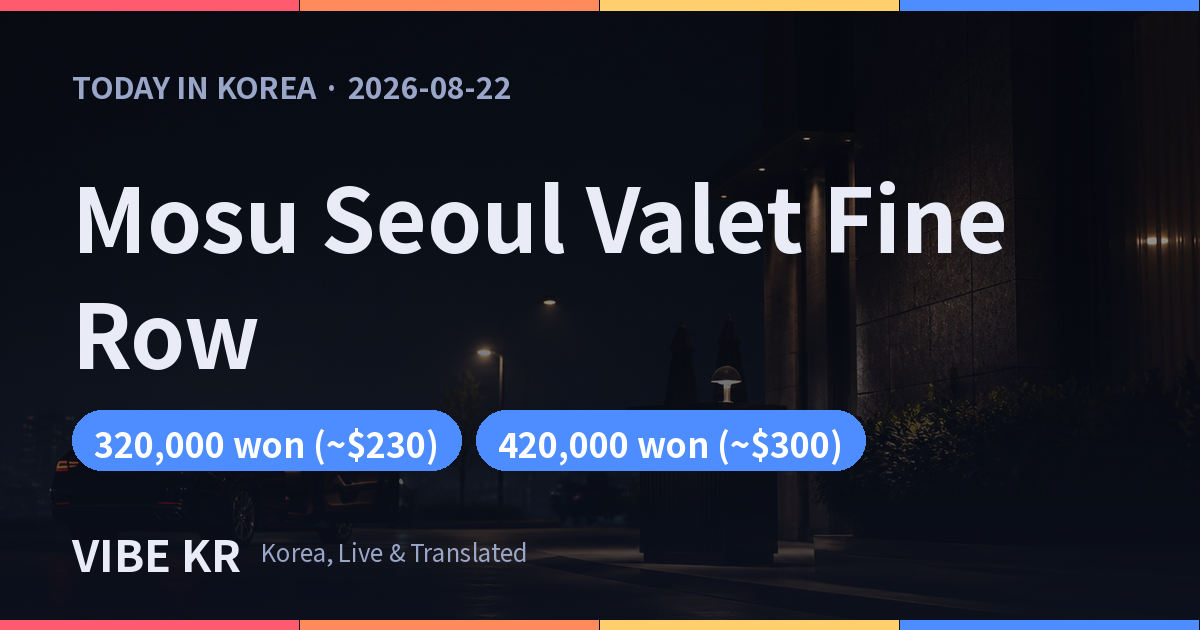
    320,000 won (~$230)Mosu Seoul lunch course price
    420,000 won (~$300)Mosu Seoul dinner course price
    70 million won (~$51,000)Estimated final repair cost from last year's valet accident

    Key points

    • On August 20, a social media post included photos of an illegal-parking notice issued by the local district office.
    • Mosu Seoul's lunch course runs 320,000 won (~$230), dinner 420,000 won (~$300), and corkage fees reach 200,000 won (~$145) — pricey even by fine-dining standards.
    • In April, the restaurant drew backlash after serving a cheaper wine vintage than the one a customer had ordered.
    • Last December, a valet driver's error damaged a customer's car, sparking a dispute over compensation.

    Chef Anh Sung-jae gained mainstream fame after appearing on a Netflix cooking competition show and has since run Mosu Seoul, a two-Michelin-starred fine-dining restaurant in Seoul. The latest controversy involves a customer who handed their car to the restaurant's valet service — only to be fined for illegal parking.

    On August 20, a user posted photos on social media that included an illegal-parking notice issued by the local district office. The poster, who also voiced disappointment with the food, called it absurd to be fined despite having used valet service. The exact timing of the violation and who was actually driving the car at the time remain unclear from what's been made public.

    Mosu Seoul's lunch course runs about 320,000 won (~$230) and dinner about 420,000 won (~$300), with a corkage fee of up to 200,000 won (~$145) for guests who bring their own wine. Given those prices, online reaction has leaned sarcastic, with many joking that fine dining apparently comes with fine-sized bills at every turn — pointing to the irony of an unexpected parking cost on top of an already expensive meal.

    This isn't the restaurant's first service controversy. In April, it emerged that a customer who ordered a 2000-vintage wine was instead served a 2005 vintage worth roughly 100,000 won less. The customer noticed and complained, but rather than apologizing immediately, the staff member reportedly offered to let them taste other vintages instead — a response that fueled criticism. Chef Anh later apologized on social media, saying the employee had been removed from wine-service duties.

    Last December, a driver from an outside valet company hired by the restaurant reportedly scraped a customer's car against a building wall while parking it. The valet company initially covered 20 million won (~$14,500) in repairs, but a closer inspection later found more extensive damage, pushing the total repair estimate to around 70 million won (~$51,000) and triggering a dispute over who should cover the difference.

    In Korea right nowIn Korea, fatigue with recurring service slip-ups at high-end fine-dining restaurants is spreading across social media. Thanks to the chef's fame and reality-TV profile, both small and large controversies tend to go viral quickly, with cynical jokes about fine dining bringing fine-sized bills everywhere you turn spreading fast through online communities.

    FAQ

    What kind of restaurant is Mosu Seoul?

    It's a two-Michelin-starred fine-dining restaurant in Seoul run by chef Anh Sung-jae, who gained international recognition after appearing on a Netflix cooking competition show.

    What's at the center of this parking-fine controversy?

    A customer claimed on social media that after handing their car to Mosu Seoul's valet service, the vehicle was hit with an illegal-parking fine from the local district office.

    Has the restaurant faced controversy before?

    Yes — in April it was criticized for serving a cheaper wine vintage than the one ordered, and in December it was involved in a compensation dispute after a valet-parking accident damaged a customer's car.

    📎 원문 보기 · Sources

    매일경제 기사 이미지Valet Parking Ticket Reignites Mosu Seoul Controversy매일경제 · Aug 22, 2026‘발레파킹’ 맡겼더니 과태료가?…안성재 셰프 ‘모수서울’, 또 주차 논란 - 매일경제Read the full story & photos at the source →
    매일경제 기사 이미지Valet Parking Ticket Reignites Mosu Seoul Controversy매일경제 · Aug 21, 2026“발렛 맡겼더니 과태료”…안성재 ‘모수 서울’, 또 서비스 잡음 - 매일경제Read the full story & photos at the source →
    매일경제 기사 이미지Valet Parking Ticket Reignites Mosu Seoul Controversy매일경제 · Aug 21, 2026“발렛 맡겼더니 과태료 받은 게 레전드”…안성재 ‘모수’ 또 논란 - 매일경제Read the full story & photos at the source →
    한국경제 기사 이미지Valet Parking Ticket Reignites Mosu Seoul Controversy한국경제 · Aug 21, 2026"발렛 맡겼더니 과태료 날아와"…안성재 '모수' 또 구설수Read the full story & photos at the source →

  • ‘D-War’ Rockets Back on Netflix After 19 Years

    ‘D-War’ Rockets Back on Netflix After 19 Years

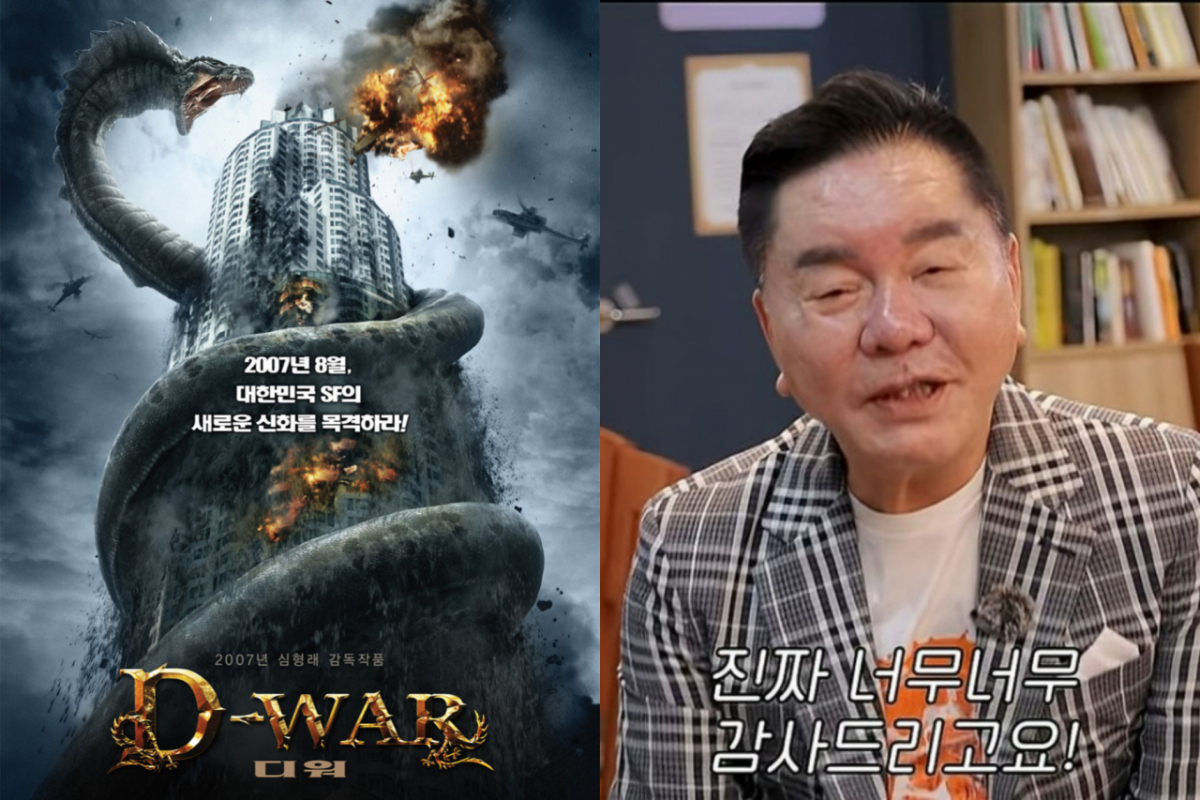
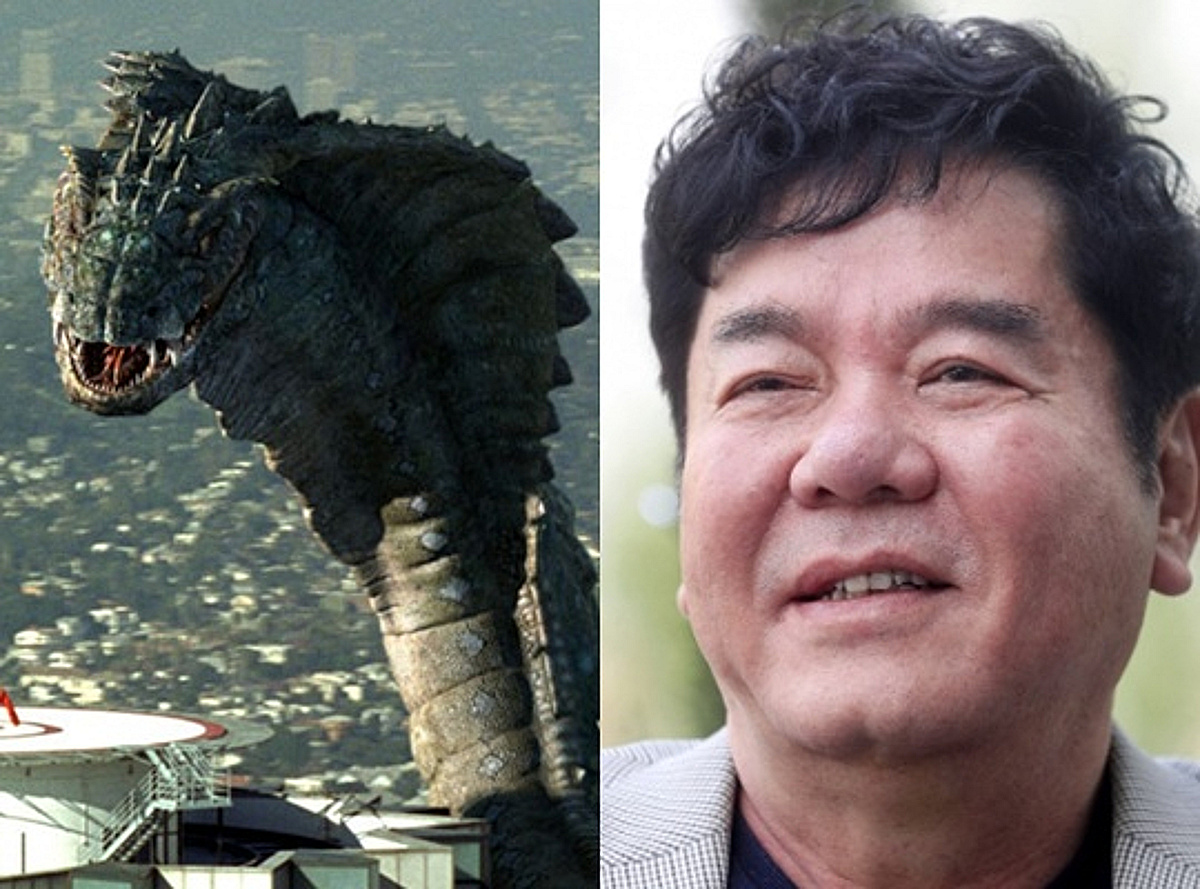
    As of August 20, 2026, director Shim Hyung-rae's 2007 monster movie 'D-War' is having an unlikely second act, climbing movie charts worldwide 19 years after its release thanks to a new Netflix run. Riding that wave, Shim recently revealed a video-game version of the sequel, 'D-War 2,' along with an update on when fans can expect it.

    19 yearsTime between D-War's release and its Netflix resurgence
    20 countriesCountries where D-War hit Netflix's movie top 10
    30 billion won (~$22M)Production budget for the original D-War

    Key points

    • 'D-War' began streaming on Netflix in early August and has since re-entered the top movie rankings in multiple countries, riding a wave of renewed popularity.
    • It climbed as high as No. 2 in parts of Europe, including Germany, France, and Italy, and landed on Netflix's daily top 10 movie list in 20 countries.
    • On August 18, Shim announced via his YouTube channel that the sequel would arrive in two years; a day later, he added that a video-game version is also coming.
    • In an interview published August 14, he said the script and financing were nearly finalized while casting was still underway.

    "D-War," a sci-fi fantasy film built around Korea's imugi legend — giant serpents that must fulfill certain conditions to become full dragons — restaged that battle in an American setting, and it's now enjoying an unexpected second wind after landing on Netflix earlier this month. At its 2007 release, critics and audiences split sharply over its production quality and CG work, and domestic ticket sales are recorded anywhere from 7.8 million to 8.4 million admissions depending on the source. The film reportedly cost around 30 billion won (about $22 million) to make.

    Since its Netflix re-release, "D-War" has climbed as high as No. 6 globally on film-ranking trackers and entered the top 10 in 20 countries, hitting No. 2 in Germany, France, and Italy. Harsh reviews of its production quality persist, but plenty of overseas viewers say they're enjoying it on its own terms as a sci-fi romp, unburdened by the baggage of its original release.

    The film's closing-credits use of "Arirang," Korea's best-known folk song, is getting renewed attention too. Back in 2007, it drew criticism as a nationalistic marketing gimmick. Shim has recently pointed to a different reception now, drawing a comparison to the cheers BTS gets performing Arirang on overseas stages, as evidence that attitudes toward the song abroad have shifted.

    Sequel news is moving fast, if a little inconsistently. In an August 18 video, Shim said the follow-up would arrive in two years; a day later, he said production had wrapped and a game version was also on the way, adding that global distribution would be handled by a major overseas distributor rather than the domestic distributors that typically handle his films. That timeline sits awkwardly next to an August 14 interview, in which he said the script and financing were essentially locked but casting was still ongoing, with a production announcement planned before year's end and filming targeted to start early next year. Under that plan, about 80% of shooting would take place in the U.S., with the rest split among Korea, Europe, and China — and Hollywood actor Jack Black is reportedly the top choice for a lead role.

    In Korea right nowIn Korea, some are reassessing the film's resurgence as proof the movie has genuine appeal beyond any nationalistic marketing push, while others find it curious that such a major sequel has been quietly moving forward with so little promotion. The fact that the overseas distributor hasn't been named yet is also fueling speculation in online communities.

    FAQ

    What is "D-War" about?

    It's a 2007 sci-fi fantasy film that reimagines Korea's imugi (giant serpent) legend as a battle over a mystical orb, staged in an American setting.

    Why is it trending again now?

    It started streaming on Netflix 19 years after its original release and has unexpectedly climbed the movie charts in numerous countries since.

    When will "D-War 2" be released?

    Director Shim Hyung-rae has pointed to a two-year timeline, but details on casting and filming have varied across his recent statements, so the schedule still appears to be in flux.

    📎 원문 보기 · Sources

    머니투데이 기사 이미지‘D-War’ Rockets Back on Netflix After 19 Years머니투데이 · Aug 20, 2026심형래 "영화 이 장면 '국뽕' 욕먹어"...19년 만에 역주행, '디워2' 나온다 - 머니투데이Read the full story & photos at the source →
    스타뉴스 기사 이미지‘D-War’ Rockets Back on Netflix After 19 Years스타뉴스 · Aug 13, 2026심형래 '디워', 혹평 속 19년만의 넷플릭스 역주행..'디워2'도 관심 [스타이슈] | 스타뉴스Read the full story & photos at the source →
    헤럴드경제 미주판 기사 이미지‘D-War’ Rockets Back on Netflix After 19 Years헤럴드경제 미주판헤럴드경제 미주판Read the full story & photos at the source →
    인벤 기사 이미지‘D-War’ Rockets Back on Netflix After 19 Years인벤 · Aug 19, 2026[Ent+] 심형래 "디워2 제작 완료, 게임도 나온다" | 웹진 인벤Read the full story & photos at the source →

  • Trump Voices Frustration Over Korea’s Hormuz Refusal

    Trump Voices Frustration Over Korea’s Hormuz Refusal

    As of August 20, 2026, President Trump has spent a second straight day airing frustration that South Korea declined to send support to the Strait of Hormuz. He claimed Korea relies on the strait for 60% of its oil imports, while President Lee Jae-myung reaffirmed on social media that Seoul is still working out meaningful ways to help.

    60%Share of Korea's oil imports Trump said pass through the Strait of Hormuz
    57Nuclear weapons Trump said North Korea possesses

    Key points

    • Speaking to reporters at the White House on August 19 U.S. time, Trump again said he was disappointed to learn Korea had turned down the request to send support to the Strait of Hormuz.
    • He argued the request was justified because Korea imports roughly 60% of its oil through the strait.
    • The same day, President Lee posted on his personal social media account that Korea's government has continued discussing meaningful contributions with Washington within the bounds of domestic law and policy.
    • Earlier that morning, in separate remarks, Trump said North Korea holds 57 formidable nuclear weapons and that he wants to meet Kim Jong Un before the year is out.

    Korea's decision not to send a warship to the Strait of Hormuz at Washington's request is back in the spotlight. Speaking to reporters at the White House on August 19 U.S. time, Trump said he wasn't happy when he learned Korea had turned the request down. It's the second day in a row he's brought it up — a day earlier he'd disclosed details of a call with President Lee Jae-myung while signaling his displeasure — and he again cited Korea's heavy reliance on the strait for oil imports as the basis for the ask.

    President Lee responded the same day with a post on his own social media account. He reiterated that Korea's government has repeatedly signaled its willingness to help normalize passage through the strait alongside the international community, and said Seoul would keep working with Washington on meaningful contributions within the limits of domestic law and policy. He added that he looks forward to meeting Trump again soon in the United States.

    In the same White House exchange, Trump also touched on his relationship with Kim Jong Un. He said Kim, unlike Korea's past leaders, has maintained a friendly rapport with him personally — but added he wasn't thrilled that large-scale U.S.-led military exercises targeting North Korea have continued despite that rapport. He said he doesn't expect any major crisis during the remainder of his term. Asked whether denuclearization remains the ultimate goal of restoring ties with Kim, he declined to give a direct answer.

    Earlier that same morning, in separate remarks, Trump said North Korea possesses 57 formidable nuclear weapons and signaled he wants to meet Kim before the end of the year. It's the first time he's put a specific number on North Korea's arsenal, a move some read as breaking from Washington's longstanding official position of pursuing complete denuclearization. Trump met Kim three times during his first term without a major breakthrough, and North Korea has long insisted it won't return to talks unless it's recognized as a nuclear power.

    In Korea right nowIn Korea, officials continue to affirm cooperation in principle while stopping short of committing troops — a stance foreign-policy watchers say could grow harder to sustain as Trump keeps applying public pressure. At the same time, his first-ever specific figure for North Korea's nuclear arsenal is drawing attention for what it might signal about the future of U.S. denuclearization policy.

    FAQ

    Why does the Strait of Hormuz matter to Korea?

    It's a critical shipping lane for oil produced in the Persian Gulf. Trump claims Korea relies on the strait for roughly 60% of its oil imports.

    How did Korea respond to the U.S. request for troops?

    Korea didn't agree to the request as originally framed, including sending a warship, but says it will keep discussing meaningful contributions with Washington within the bounds of domestic law and policy.

    Why is the "57 nuclear weapons" comment getting attention?

    Washington has officially maintained complete denuclearization as its goal for North Korea, so putting a specific number on its arsenal is being read by some as an implicit acknowledgment of North Korea as a nuclear-armed state.

    📎 원문 보기 · Sources

    한국경제 기사 이미지Trump Voices Frustration Over Korea’s Hormuz Refusal한국경제 · Aug 20, 2026트럼프 "한국, 호르무즈 지원 거절 기분 안좋아"…재차 불만 표출Read the full story & photos at the source →
    머니투데이 기사 이미지Trump Voices Frustration Over Korea’s Hormuz Refusal머니투데이 · Aug 20, 2026트럼프 "한국, 호르무즈 지원 거절해 불쾌"…이틀만에 또 불만 표출 - 머니투데이Read the full story & photos at the source →

  • SK Hynix to Cancel $29B in Stock, Eyes Dividend Hike

    SK Hynix to Cancel $29B in Stock, Eyes Dividend Hike

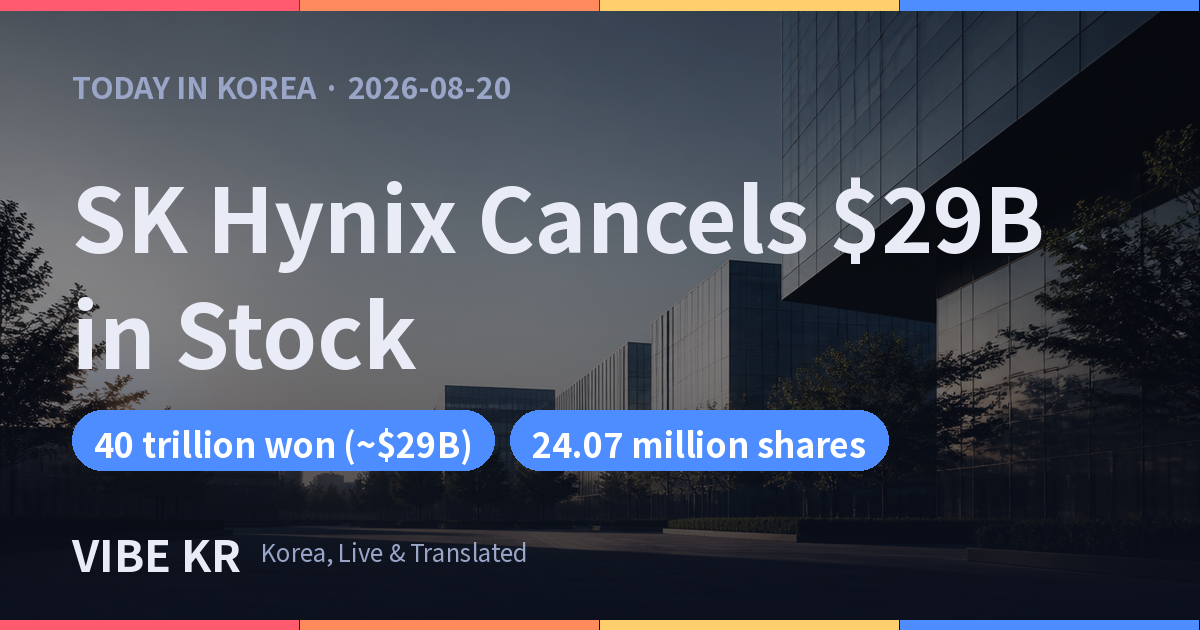
    As of August 20, 2026, SK Hynix has committed to spending 40 trillion won (roughly $29 billion) to buy back its own shares and cancel them entirely. The move covers 24.07 million shares — about 3.3% of shares outstanding — making it the largest treasury-stock cancellation ever carried out by a Korean listed company. The chipmaker says it's also weighing a bigger cash dividend.

    40 trillion won (~$29B)Total earmarked for the buyback and cancellation
    24.07 million sharesShares to be canceled
    3.3%Share of shares outstanding being retired
    69 trillion won (~$50B)Net cash on hand as of end-Q2 2026

    Key points

    • The board approved buying back 24.07 million shares — 3.3% of shares outstanding — on the open market and canceling all of them.
    • The buyback is valued at roughly 40 trillion won (about $29 billion), based on the previous day's closing price of 1,662,000 won (about $1,200) per share.
    • Purchases run for about three months starting August 20, with the shares retired once buying wraps up.
    • SK Hynix raised its shareholder-return floor from up to half of three-year cumulative free cash flow to at least half.

    SK Hynix's board just signed off on one of the biggest capital-return moves in Korean corporate history. The chipmaker will buy 3.3% of its own outstanding shares directly on the market and retire every one of them once the purchases wrap up, shrinking the total share count for good. At the previous day's closing price, the price tag comes to roughly 40 trillion won ($29 billion) — the largest treasury-stock cancellation by won amount ever announced by a company listed on Korea's stock exchange.

    The buyback isn't the only lever SK Hynix is pulling. The company is also weighing an increase to its cash dividend, including both its regular payout and special dividends, with specifics on size and timing to be announced alongside third-quarter (July–September) earnings. On top of that, SK Hynix raised the floor on its shareholder-return policy, pledging to return at least half — up from a prior cap of "up to half" — of cumulative free cash flow over the next three years.

    The timing traces back to a widening gap between fundamentals and share price. SK Hynix has been posting record quarterly earnings on the back of a red-hot memory-chip market, with net cash around 69 trillion won ($50 billion) as of the end of the second quarter — yet its stock has fallen more than 10% over the past month. The company said its business competitiveness, cash-generating power, and mid-to-long-term growth potential aren't fully reflected in the current share price, prompting it to move up a shareholder-return plan that was already in the works.

    Still, some investors see room for more. Rivals in next-generation memory, U.S.-based Micron and SanDisk, have pledged to return all leftover cash — after operations and capital spending — to shareholders, making SK Hynix's move look comparatively modest by contrast. But with the exact dividend figures still unannounced, analysts say the full scope of the shareholder-return package will hinge on what the company reveals later this year.

    In Korea right nowDomestic investors are largely reading the move as a signal meant to defend the stock price. Despite record-breaking earnings, shares have wobbled recently, and the company's unusually large buyback is being interpreted as a direct pushback against the idea that SK Hynix is undervalued. Still, with the dividend details yet to be finalized, some analysts are urging caution until the follow-up announcement lands with third-quarter earnings.

    FAQ

    What does it mean to "cancel" treasury shares?

    It means the company permanently retires shares it bought back from the market, shrinking the total number of shares outstanding — which effectively raises the value of each remaining share.

    Why announce such a large buyback now?

    SK Hynix said that despite strong earnings and cash generation, its stock has dropped sharply over the past month, so it decided to move up a shareholder-return plan that was already in the pipeline.

    What happens with dividends going forward?

    The exact size and structure of the cash dividend haven't been finalized. SK Hynix says it will share details when it reports third-quarter (July–September) earnings.

    📎 원문 보기 · Sources

    동아일보 기사 이미지SK Hynix to Cancel B in Stock, Eyes Dividend Hike동아일보 · Aug 20, 2026SK하이닉스, 40조 자사주 소각… 현금배당도 검토Read the full story & photos at the source →
    경향신문 기사 이미지SK Hynix to Cancel B in Stock, Eyes Dividend Hike경향신문 · Aug 19, 2026SK하이닉스, 40조 자사주 취득·전량 소각…‘역대급’ 주주환원Read the full story & photos at the source →

  • Ex-Samsung Researcher: CXMT Was Built to Steal Tech

    Ex-Samsung Researcher: CXMT Was Built to Steal Tech

    As of August 19, 2026, a former Samsung Electronics researcher who was a founding member of Chinese DRAM maker CXMT (ChangXin Memory Technologies) has testified in court that the company aimed to absorb Samsung's chipmaking know-how from the moment it was established. The witness himself was already handed a stiff sentence in a separate trial for leaking Samsung technology.

    1.6 trillion won (~$1.2B)Amount Samsung invested to develop the leaked 18nm DRAM process
    618 stepsNumber of DRAM production process steps targeted in the leak
    7 yearsPrison sentence handed to the former researcher in the first trial
    No. 4 worldwideCXMT's ranking in global DRAM market share

    Key points

    • Former Samsung Electronics researcher Jeon (56), a founding member of CXMT, testified as a witness at the Seoul Central District Court on August 11.
    • He testified that CXMT's management aimed from the outset to acquire Samsung's DRAM process know-how, without building its own R&D labs or production lines.
    • The leaked material reportedly covered 618 steps of the 18-nanometer DRAM process that Samsung spent 1.6 trillion won (about $1.2 billion) to develop.
    • Jeon was indicted for handing over the technology after moving to CXMT in 2016, and was sentenced to seven years in prison in a first-trial ruling this past April.

    Startling testimony has emerged in the criminal trial over technology leaks from Samsung Electronics to Chinese chipmaker CXMT (ChangXin Memory Technologies). Jeon, 56, a former Samsung Electronics researcher who was among the company's founding members, took the stand on August 11 before the Seoul Central District Court's 32nd Criminal Division (Presiding Judge Ryu Kyung-jin) and testified that CXMT's leadership had planned from the very beginning to build its products by absorbing Samsung's technology. According to his account, the company had no independent research division or production facilities when it was founded, and showed no real intent to develop its own technology.

    Jeon also testified that the company's internal reporting structure differed depending on employees' country of origin. He said staff complained internally that reports written by Taiwanese employees were accepted at face value, while material from Korean employees was routinely dismissed. The information at issue in this case reportedly contains core details on 618 individual steps involved in DRAM manufacturing.

    Jeon himself is one of the defendants in the case. After 28 years at Samsung Electronics, he moved to CXMT in 2016 and was accused of illegally passing along information related to Samsung's 18-nanometer DRAM process — technology the company spent 1.6 trillion won (about $1.2 billion) to develop. He received a heavy seven-year prison sentence in his own first-trial ruling this past April. Notably, he did not disclose evidence of organized corporate involvement during his own trial but changed his account when testifying in a co-defendant's case, raising questions about whether he'll offer further testimony once his appeal begins.

    Prosecutors, who have been investigating since 2024, have indicted roughly a dozen development staff, including Jeon, on charges including leaking core national technology overseas. They believe CXMT grew rapidly by recruiting former Samsung employees and absorbing core technology, and that this pipeline of expertise helped the company become the first Chinese firm to mass-produce 10-nanometer-class DRAM in 2023. As a result, within roughly a decade of its founding, the company climbed to fourth place worldwide in DRAM market share, behind Samsung Electronics and SK hynix.

    Legal experts say that if this testimony is accepted as fact, it could serve as evidence for Samsung to pursue trade-secret claims. That's fueling talk of filing a complaint against CXMT with the U.S. International Trade Commission (ITC), built on the record from Korea's domestic investigation and trial.

    In Korea right nowIn Korea, attention is focused on how this testimony points to an organized, company-level effort to acquire technology rather than the actions of a lone individual. The semiconductor industry has long warned that if process information designated as core national technology leaks abroad, Korean firms' technological edge could narrow quickly — making the trial's outcome, the coming appeal, and the possibility of an ITC complaint the industry's next flashpoints to watch.

    FAQ

    What kind of company is CXMT?

    It's China's largest DRAM manufacturer, which climbed to fourth place in global DRAM market share within roughly a decade of its founding, trailing only Samsung Electronics and SK hynix.

    Why does this testimony matter?

    It supports the idea that the Samsung technology leak may have been an organized, company-wide effort rather than an individual's actions — which could become grounds for future legal action.

    What punishment did the witness, Jeon, receive?

    He was sentenced to seven years in prison in a first-trial ruling this past April, and an appeal trial is expected to begin soon.

    📎 원문 보기 · Sources

    동아일보 기사 이미지Ex-Samsung Researcher: CXMT Was Built to Steal Tech동아일보 · Aug 19, 2026삼전 前직원 “中 CXMT, 설립때부터 삼성 기술 탈취 노려”Read the full story & photos at the source →
    한국경제 기사 이미지Ex-Samsung Researcher: CXMT Was Built to Steal Tech한국경제 · Aug 18, 2026"中 CXMT 설립 때부터 삼성전자 D램 기술 탈취"Read the full story & photos at the source →