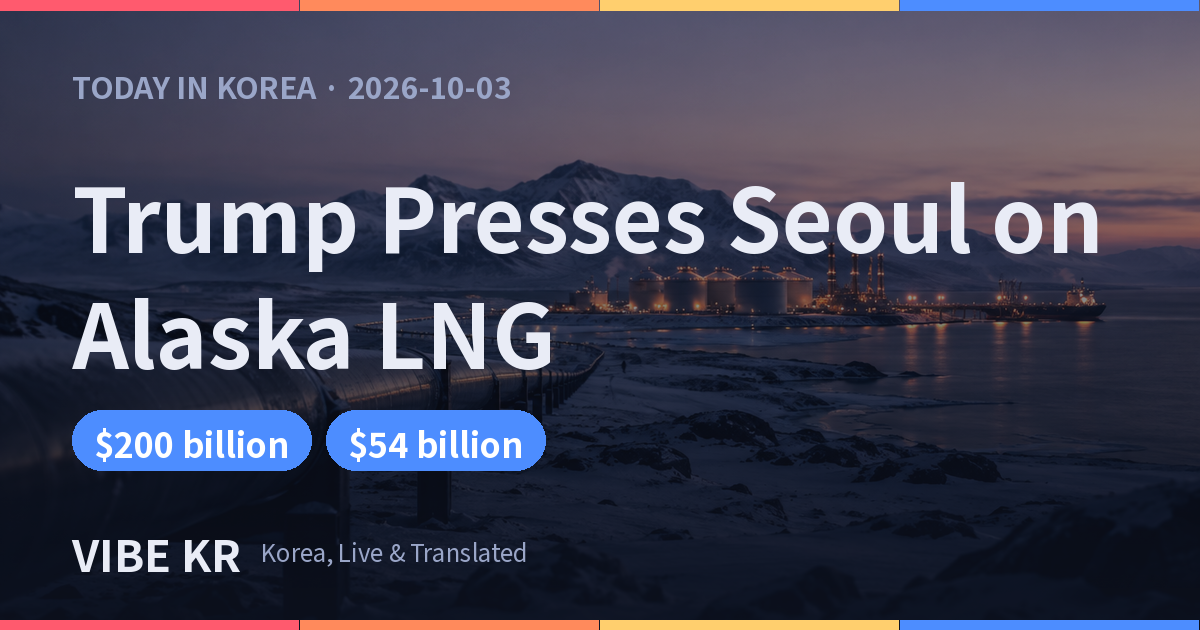
As of October 3, 2026, President Donald Trump publicly warned that South Korea will pay more if it doesn't move quickly to sign on to the Alaska LNG project. Seoul maintains that whether to invest, and how much, hasn't been decided, which raises the stakes for follow-up US–Korea talks.
Key points
- Pressed on the fact that Korea's investment isn't final, Trump said his announcement wasn't premature and that if Korea doesn't want to take part, the US can simply charge more.
- He told reporters to pass along to Korea that if it doesn't sign soon, he'll double it, but he didn't say what “it” is.
- Korea's trade and industry ministry says it's only in an early stage of weighing commercial viability and domestic procedures, and that no decision on whether or how much to invest has been made.
- Alaska LNG is a roughly 1,300 km (about 810 miles) pipeline project running from the North Slope in the north to Nikiski in the south, and its economics have been debated for years.
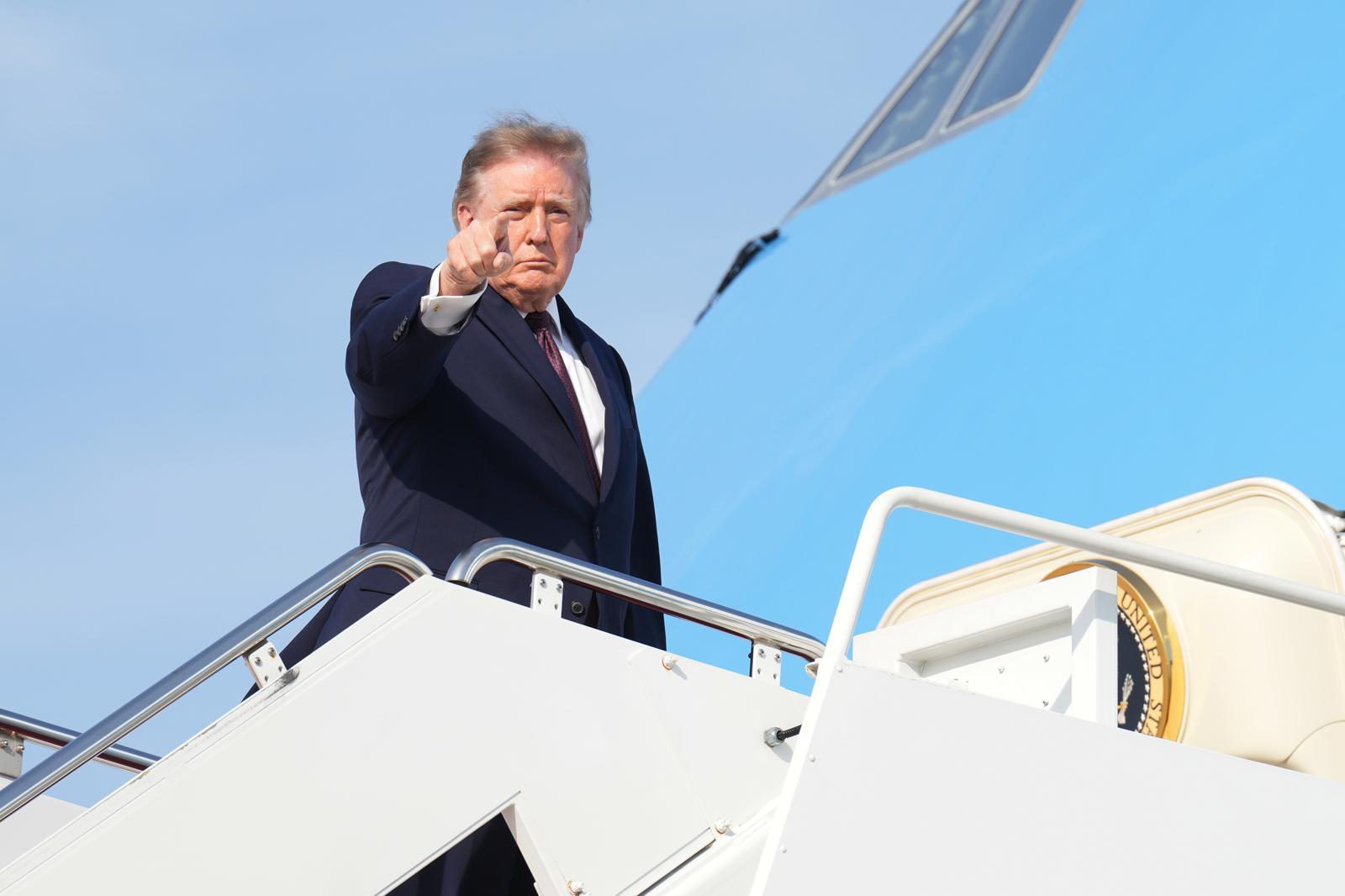
President Trump took questions from reporters at the White House on Oct. 2 local time. The question: Korea hasn't signed on to Alaska LNG and is still reviewing it internally, so did the announcement get ahead of things? He said no, it wasn't premature, and claimed a Korean delegation was in the room for the talks. If Korea doesn't want in, he said, that's fine, but the US would charge more.
As reporters kept pointing out that Korea hadn't signed, he told them to let Korea know that if it doesn't sign soon, he'll double it. He didn't say whether he meant tariffs or some other financial burden. Korean media read the remark as a hint at added pressure such as higher tariffs.
The backdrop is an announcement on Sept. 30. Trump said then that Korea plans to put up to $200 billion into US energy-related projects, with roughly $54 billion of that going to Alaska LNG. Seoul pushed back right away. Korea's trade and industry ministry said the two countries had only agreed to look at commercial viability, and that no investment decision or amount had ever been fixed. Even if it leads to an investment, the ministry said, profitability would have to be confirmed and domestic legal procedures satisfied. Minister Kim Jung-kwan reportedly told the US Commerce Secretary that the announcement had gotten ahead of the talks, and expressed regret.
The Alaska LNG concept is to pipe natural gas from the Arctic North Slope about 1,300 km (roughly 810 miles) south to Nikiski, liquefy it and export it to Asia and elsewhere. With costs expected to top $50 billion and construction expensive, the project has long been dogged by questions about whether it pencils out. In working-level talks ahead, verifying the economics and nailing down specific investment terms look likely to be the main sticking points.
FAQ
What did Trump mean by “double”?
It's unclear. He didn't say what would be doubled, and Korean media read it as a hint at tariff hikes or other added economic burdens.
Has Korea committed to investing in Alaska LNG?
No. Korea's trade and industry ministry says nothing has been decided on whether or how much to invest, and that it's first examining commercial viability and domestic legal procedures.
What is the Alaska LNG project?
It's a large-scale project that would carry natural gas from Alaska's North Slope about 1,300 km (roughly 810 miles) by pipeline to Nikiski in the south, where it would be liquefied and exported to Asia and elsewhere. Costs are expected to exceed $50 billion, and its economics have been debated for years.
More from Korea today
📎 원문 보기 · Sources
동아일보 · Oct 03, 2026트럼프 “韓 알래스카 투자 서명 안 하면 2배 청구”Read the full story & photos at the source →


Leave a Reply