As of August 7, 2026, Seoul has spent four straight days under its highest-level heat warning, with tropical nights — when temperatures never dip below 25°C (77°F) — dragging on for more than two weeks. On August 6, an automated sensor in Yeongdeungpo District logged 40.0°C (104°F), while the official weather station reading hit this summer's high of 37.9°C (100.2°F). Experts point to the asphalt and concrete blanketing the city as a key reason the heat won't let up, even after dark.
Key points
- An automated sensor in Yeongdeungpo District hit 40.0°C (104°F) on August 6 — the first unofficial reading above 40°C since 41.8°C in Gangbuk District in August 2018, eight years ago.
- Seoul's impervious surface area — pavement that rain can't soak into — grew from 28,613 hectares in 2000 to 30,353 hectares last year, an increase equal to roughly six times the size of Yeouido island.
- As of August 5, cumulative heatstroke cases reached 2,665, including 23 deaths, already surpassing last year's full-year total.
- Because of the heat, the KBO canceled all 15 games across five stadiums from August 7-9 and plans to resume play on August 11.
Seoul has been stuck under its highest-tier heat warning for four straight days, with tropical nights — when temperatures refuse to drop — running for more than two weeks. On August 6, an automated sensor in Yeongdeungpo District logged 40.0°C (104°F), while the official weather station reading hit this summer's high of 37.9°C (100.2°F). It's the first reading above 40°C since 41.8°C was recorded in Gangbuk District in August 2018, eight years ago — though because the sensor sits on a rooftop, it's treated as unofficial.
Experts point to the asphalt and concrete covering the city as the reason the heat won't break, even overnight. These surfaces don't absorb rainwater, so they lose almost none of the cooling effect that evaporation would otherwise provide — instead, they slowly release the heat they soaked up during the day well into the night, warming the air around them. By the city's own count, this kind of impervious surface grew from 28,613 hectares in 2000 to 30,353 hectares last year — an increase alone equal to roughly six times the size of Yeouido island.
Meanwhile, the street trees that could help cool things down are disappearing. Seoul's street tree count fell from 303,144 in 2015 to 288,877 in 2024, a 4.7% drop, and London planetrees — which cast wide shade and hold a lot of water — fell by more than 35% over the same period. Chinese fringe trees, which provide comparatively little shade, nearly doubled in number instead, a shift experts say has actually weakened the city's heat resilience.
Heatstroke cases and deaths are climbing fast, too. Korea Disease Control and Prevention Agency data show cumulative heatstroke cases at 2,665 through August 5, including 23 deaths — both already above last year's full-year totals. The heat forced the KBO to scrap all 15 games scheduled across five stadiums from August 7 through 9, with play set to resume August 11, and President Lee Jae-myung has classified the situation as a national-scale climate disaster, directing officials to concentrate resources on protecting vulnerable populations.
A weekend dip in the upper-level pressure trough should bring temperatures down slightly, though they'll still run above the seasonal average. Next week, Typhoon Dolphin — the season's 13th — could shave off another 2-3°C as it passes through the East China Sea, but forecasters warn the heat may snap back once it clears. The Korea Meteorological Administration expects daytime highs around 35°C (95°F) to persist across the greater Seoul area for roughly the next ten days.
FAQ
What does 'impervious surface' mean?
It refers to ground covered by asphalt or concrete that rainwater can't soak into. These surfaces trap heat for longer, which worsens urban heat waves and tropical nights.
How long will this heat wave last?
Typhoon Dolphin, passing by early next week, could bring a temporary dip in temperatures, but the Korea Meteorological Administration expects sweltering conditions to continue across greater Seoul for roughly another ten days after that.
How is the heat wave affecting daily life and the economy?
Heatstroke cases and deaths are rising, professional baseball games have been canceled en masse, and more consumers are ordering delivery instead of dining out, shifting patterns for local businesses.
More from Korea today
US Sets 15% Tariff on Polysilicon Derivatives, Dec. 4 →YG's Dance Videos Hit 7B Views, All by Yang Hyun-suk →
📎 원문 보기 · Sources
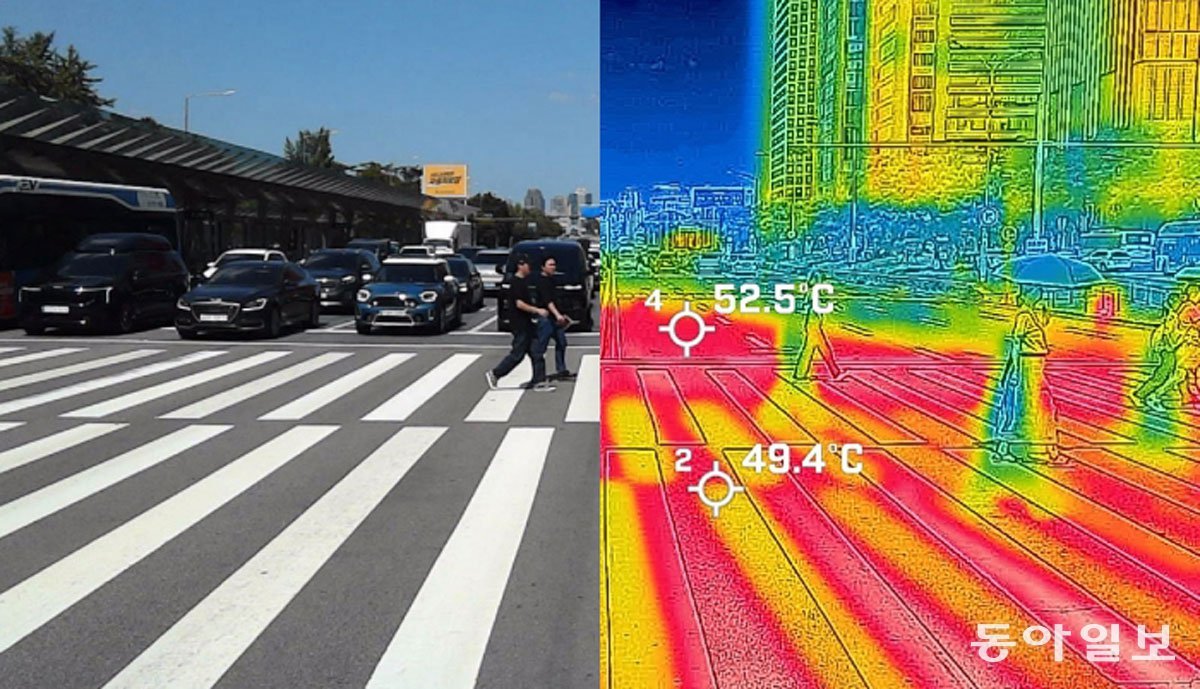
동아일보 · Aug 07, 2026서울 절반이 아스팔트-콘크리트 ‘열 저장고’… 난로처럼 공기 데워Read the full story & photos at the source →
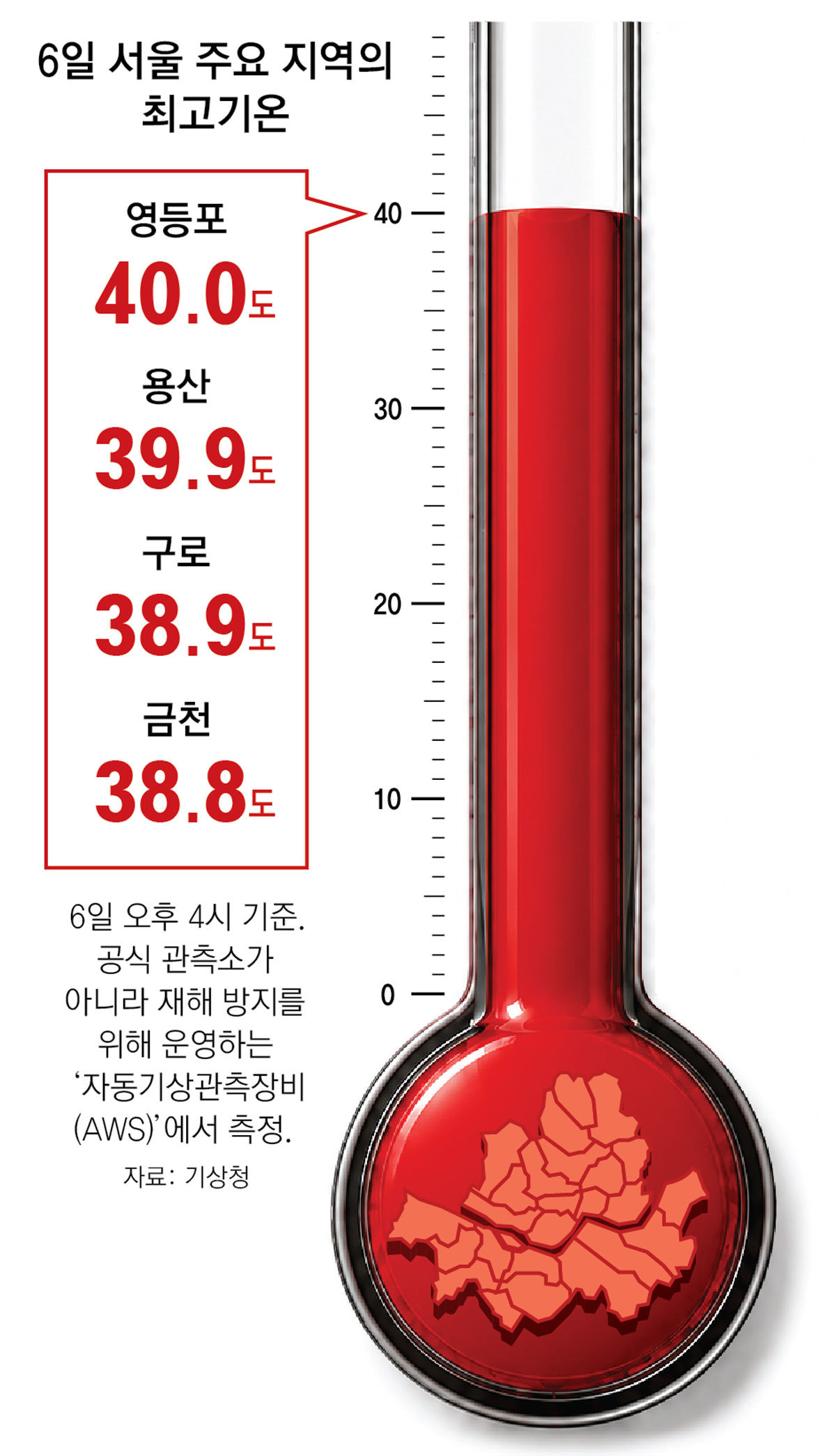
동아일보 · Aug 07, 202640℃ 불덩이 서울Read the full story & photos at the source →
Leave a Reply